How Faith Helps Us Build Capacity

Image by StockSnap via Pixabay

“I found it strange, yet perfectly balanced, that I needed my wounds to heal my faith, and my faith to heal my wounds.” ~ Rumi

Building capacity has become a buzz-word within organizations the last decade, seeping into other areas like physical and mental health. When I first heard the phrase about ten years ago, I found it confusing, seeing the word “capacity” as a measurement of volume! Of course its root is the word “capable” and that’s what helped me get less confused. Building capacity means building capability.

Formally, capacity building is the process of developing the skills, knowledge, tools and resources an individual or organization needs to be able to function effectively, sustainably, and adapt to change. This applies to constant growth and learning, challenging yourself and reflecting on your progress. I think, most importantly, it’s about developing resources. One of those resources for me is my faith.

It’s tricky when we seek to blend faith with mental health.  Previously, both Freud and Skinner disparaged reliance on religion or faith, seeing it as a weakness. However, research is showing that for some, a spiritual belief system is not just important to their mental health, it just might be an undervalued resource.

In the Handbook of Adult Resilience (edited by John W. Reich, Alex J. Zautra, and John Stuart Hall, 2010), researchers note “(Religion) may establish a foundational meaning system that orders the individual’s understanding of the universe and particular events.” In other words, our faith can help us make sense of events, perhaps leading us to meaning-making sooner rather than later when we go through dark times.

One criticism of faith held by Freud was that it was a crutch, something people leaned on to avoid meeting an issue or catastrophe head on. However, in the Handbook of Adult Resilience, a summary concludes, “These studies make clear that religious people do not generally bury their heads in the sand or wait helplessly for someone else to solve their problems. In contrast to these stereotypes, the empirical evidence suggests that religious people are generally actively engaged in dealing with their personal tribulations. Moreover, their religiousness may enhance such efforts.”

“When we reach the limits of our own strength, and courage, something unexpected happens. We find reinforcement coming from a source outside of ourselves. And in the knowledge that we are not alone, that God is on our side, we manage to go on.” ~ Rabbi Harold Kushner

The research also showed positive results in aspects of resilience and in spiritual transformation. They found that as these resources of faith sustained people in times of trouble, their certitude that faith is a valuable tool grows. In short, people showed that faith strengthened stress-related growth! Faith actually helps us build capacity. It helps us deal, and it helps us adapt, and it helps us grow.

I only cite these findings to uphold my own personal experience. That when I’m literally brought to my knees by life events, I have found my faith to be a source of comfort and strength, simultaneously being held AND pushed to grow!

In our old house, there was a short hallway with closets on both sides between the primary bedroom and the bathroom. Three times in my life I have completely surrendered in that spot, wailing with grief and anger and despair. Even after we remodeled that area, I went to the same spot, because it had been sanctified by my tears. My complete surrender, (dumping out all the emotion, crying out to God all the questions and all the accusations and all the anguish), cleansed my spirit and allowed a kind of grace to come in that wasn’t possible when I was holding so tightly to my desolation. Then, my faith begins to comfort me.

Where do I find faith? Personally, I find it in writings from great spiritual teachers, and in nature. You might find it solely in the Bible or the Koran, or wherever your heart is touched. If you have trouble with religion and faith feels elusive, turn to nature. Nature continues despite everything. Seeds become trees, insects busy themselves composting and pollinating, mountains stand for centuries. There is comfort in that continuation. You, also, will continue.

As a child, my family would often go camping in the Rocky Mountains in Colorado. I remember even as a little girl being so in awe of the grandeur of the mountains and the perfection of nature. I felt one with the earth and the nature surrounding me. It gave me knowledge I have carried with me; that things may go horribly wrong, there may be enormous grief, or earth-shattering trauma, but if I am of nature, I will persist.

When I look back over my life, I see how I constantly, sometimes subconsciously, kept building that resource of faith. Bad things do happen to good people. Bad things just happen. Faith can help us through those times and become a reliable tool in our box of resources. I just have to remember to bring that tool out first, and it will support my other resources on the journey.

Every time we face a difficulty we have a choice. The opportunity is there to build capacity and to develop belief in our own capability to deal, adapt, and grow. I encourage you to bring faith into that process.

“People who pray for miracles usually don’t get miracles, any more than children who pray for bicycles, good grades, or good boyfriends get them as a result of praying. But people who pray for courage, for strength to bear the unbearable, for the grace to remember what they have left instead of they have lost, very often find their prayer answered.” ~ Rabbi Harold Kushner
Staying Centered in Times of Chaos

“Respond from the center of the hurricane,

Rather than reacting from the chaos of the storm.” – George Mumford

Full disclosure, I’m writing this piece today for myself. Because I know these things; I have many tools at my disposal to keep me sane and grounded in these times, but on the days it’s all just too overwhelming I will forget my tools, or distract myself, or get sucked into despair and/or anger. So I need to remind myself how to stay centered, grounded and connected with Spirit in these challenging times.

Of course, base camp is meditation or prayer, whatever brings you into space with your soul, higher consciousness, the Universe, God, the Beloved. Get yourself daily to a quiet, private place, even if it’s in your mind. Here is where we can be soothed, and remember we are part of something much bigger than the latest headline. Here we can empty our mind of the input of the world, and open it to receive the input of Spirit. Here is where we can surrender, lay our worries and fear on the table, and receive comfort. Here is where we can truly BREATHE.

“A long, deep breath is the equivalent of a full stop

and the key to centering.” – Eric Maisel

Don’t underestimate the power of the breath.  As we center, employing a breathing practice that uses deep, belly breaths signals our parasympathetic nervous system that it’s safe to relax. Regulated breathing stimulates the vagus nerve which lowers your stress responses. With practice, quieting the mind, tuning in to Spirit, and deep breathing can return you to a state of centeredness within minutes. Keeping a regular practice can be difficult with the distractions all around us, but the more often we practice, the quicker we can return to a state of calm when we really need it!

Another tool I need to remember is to ask myself, what do I really have control over? Today, in this moment, what is in my control? As ego-minded as we tend to be, when reduced to this question, it can be difficult to realize we have very little control or power over many of the things we are upset about. This doesn’t mean we are powerless, but it does mean to put our energies where we can truly make a difference.

What IS in my control is how I treat myself and others. I’ve been making a conscious effort to exchange greetings with people I see as I go about my daily life. In these derisive times, connection is vital. Compassion is everything. A kind word, a compliment, even a smile, can create a moment of positive energy, of love energy, that stitches up a bit of the torn fabric our society has become. This I can control. This I where I can see evidence of change. This is where I restore my faith in humanity. I find the smallest attempt at connection elicits such warm, human responses!

“Be kind, for everyone you meet is fighting a hard battle.” ~ Plato

I’ve always loved this quote, mainly because it’s true. As they say, if you scratch the surface of literally anyone, you’ll find wounds and scars and much more in common than the differences a lot of social media wants us to focus on. So yes, take control over daily interactions and CONNECT.

“All right,” you say, “but I can’t be an ostrich, or a Pollyanna, or a guru on a mountaintop, I have to live and deal with this reality. We are living is a time of great upheaval and chaos, and it would be irresponsible and ignorant of me to not be informed.” I get it. How do we engage without being engulfed? The answer, of course, is that we have to limit our input. Choose one or two sources for information that you can truly trust, and shut down or shut off everything else. If your feed is full of inflammatory rhetoric, unfollow those sites so they’re not thrust on you, but you can check them out when you choose to. Same with friends who may post constant chaos. As with any diet, take control of what you’re feeding yourself!

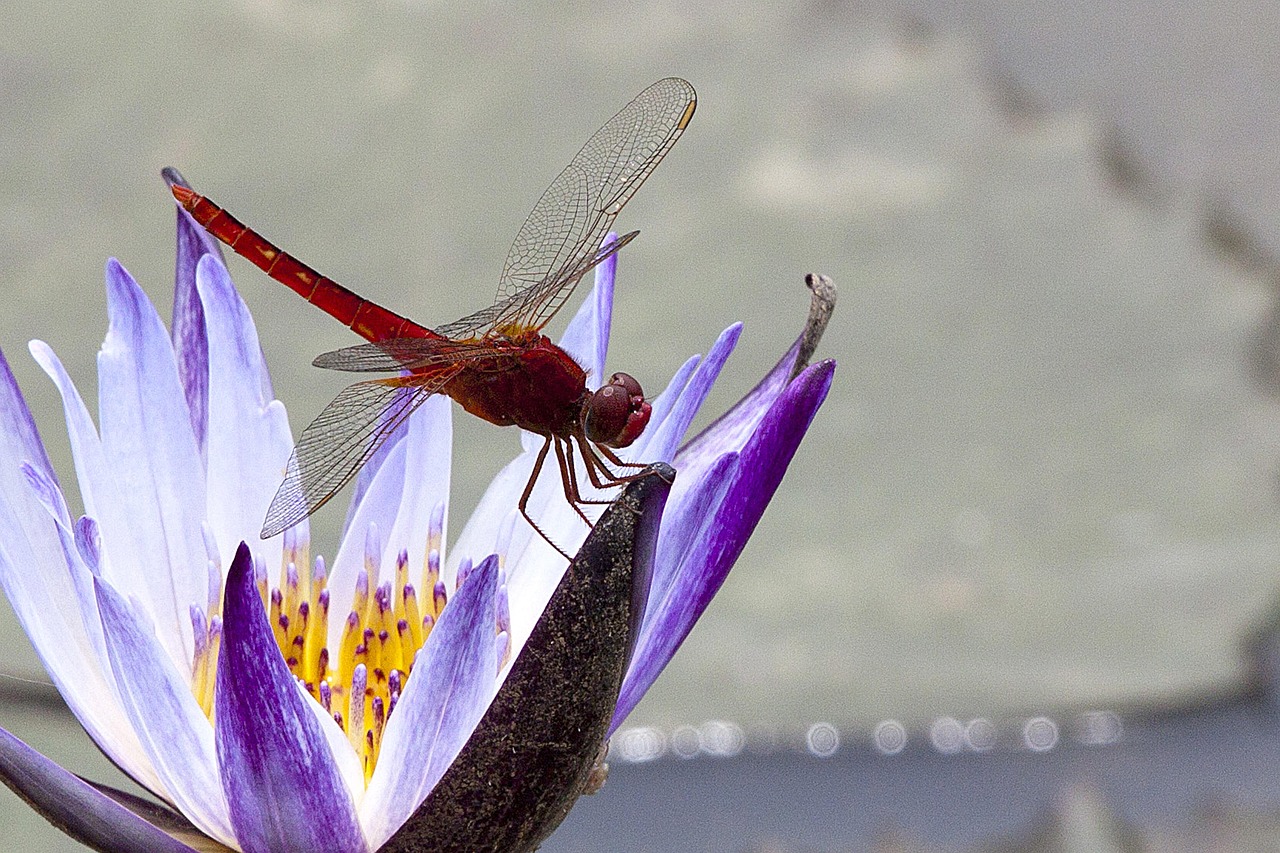
I try to be like a dragonfly. Have you watched a dragonfly near water? They flit around, living their life, then occasionally dip in for water. If they constantly sat on the water drinking, they would get too heavy and drown! They take a sip, then take off. I’m trying to do that with the news. Dip in, see what’s up, then take off so I don’t drown.

And yes, we must also be active participants in our society. If we feel moved to speak out or resist or protest, we must do it! But how much better if we can do it from a place of centeredness, a heart of kindness, and a balanced mind? These times call for an army of grounded, spirit filled warriors. Lead with compassion. Lead with connection. Lead with love.

“Darkness cannot drive out darkness; only light can do that.

Hate cannot drive out hate; only love can do that.” ~ Martin Luther King, Jr.

Meet me in the eye of the hurricane, and let’s make good trouble.

Victoria McGee

4/13/25

Spiritual Bypassing in Trauma Healing

Image by Anke Sundermeier from Pixabay

I’ve seen the term “spiritual bypassing” tossed around a lot lately. Although the term was first coined by psychotherapist John Welwood in the early 1980s, it’s gained public awareness due to a combination of the growing spirituality movement, and also social media quotes and memes. It’s definitely something I’ve experienced and anyone healing from trauma needs to be aware of it.

Spiritual bypassing is defined by Welwood as “a tendency to use spiritual ideas and practices to sidestep or avoid facing unresolved emotional issues, psychological wounds, and unfinished developmental tasks.” Often, people aren’t aware they are sidestepping or avoiding dealing with issues, they truly believe applying spiritual practices solely will provide complete healing. To say “Everything happens for a reason” or “Heaven needed another angel” might give momentary comfort, but it doesn’t deal with, or in any way heal, the kind of deep mental and emotional wounds we suffer in this human life.

As much as I write about including the soul in healing trauma, the key word is “include” which means “involve as a factor.” It doesn’t mean rely on solely! My faith and spiritual beliefs have certainly helped me heal trauma, but they are not enough on their own. I had deep family and relationship issues, traumatic events, and profound grief to deal with. These mental and emotional matters required skilled psychotherapy, and I’m forever grateful to the therapists I’ve worked with over the years. Without their guidance and insight, I would never have made the progress I have!

Soon (literally days) after I was assaulted, a so-called spiritual teacher led me on a guided visualization to a safe space, where she suggested I picture my attacker and offer forgiveness.

I can’t tell you the damage this did. I was young, so of course I put my trust in an older, wiser person. But this was not the time for me to move into forgiveness, delay my rage, and stuff down my hatred. I had been violated and did not feel safe in the world. If I felt rage, I thought “No, this happened for a reason. It will make me stronger.” If I felt unsafe, I thought “No, you need to trust that God will keep you safe.” (Btw, where was God when it happened?)  If I felt hatred, I thought “No, I need to forgive.” I thought of myself as spiritual, therefore I had to respond spiritually.

Thankfully, I quickly moved into therapy where my very human feelings were validated. Not just validated, but exhumed, released, and poured out into that safe space. Not only that, but I learned about trauma, trauma responses, PTSD, and that everything I was feeling, or would feel, was a normal response to an abnormal situation. Good therapists teach us about ourselves and the human condition! My healing journey continued with therapy and my only prayer became, “Help me heal.” Later, years later, there was eventually forgiveness, but it was for my own sake, so I could move forward.

Spiritual bypassing can delay deep mental and emotional healing. Unless you work with a skilled therapist to look at your issues head on, spiritual platitudes will only sustain you for so long. According to Gail Andrews, LCSW (@mentallywellish), “Spiritual bypassing is an egoic denial that keeps the trauma pushed down and unattended. When this happens our souls ache and we may even scramble for more spiritual guidance, inspiration and direction. The cycle persists – and the work of the soul is actually denied.”

I don’t know about you, but I can be the queen of avoidance. And I will use spirituality to avoid dealing with issues that confront me. Typical avoidance tools are work, busyness, scrolling, gaming, cleaning, streaming, eating, caring for others – but it’s important to include spiritual bypassing in this list. Are you diving deep into a spiritual or religious practice, only to find yourself empty and hurting when you’re not actively worshipping or praying? This is a clue that you need therapy in conjunction with your practice. Something is remaining unhealed, and to attempt to heal the soul without healing the mind is like wrapping a broken finger without a splint. It will heal, but it could heal straighter and stronger with more effort put into the treatment.

In conjunction with this, there is evidence that spirituality itself can actually have a positive effect on your mental health. Lisa Miller, professor of psychotherapy at Columbia University has done research with brain imaging that recorded how spiritual thoughts effect the brain. The region of our brain that is associated with emotional and sensory processing actually calms when we recall a spiritual experience. What gurus and mystics have always known – quieting the mind, spiritually sitting, praying or meditating – protects our mental health.

I saw a meme recently complaining about people saying “My trauma made me stronger.” Some find this kind of thinking problematic, especially people with CPTSD, victims of childhood abuse.  I understand what they mean. It can feel like spiritual bypassing. A better option would be “Healing trauma made me stronger.” It’s not like trauma was a choice. The choice lies in our healing – how we choose to heal, how soon, and how we navigate moving forward. My hope is that we continue to find the overlaps and helpful tools within therapy and spirituality. For me, working these two paths together was necessary in healing trauma – doing one without the other would have delayed my growth, both as a person and as a soul.

Do you have experience with this? What are your thoughts about this topic?

Holding Our Collective Breath

virus-4971922_1920

“When you own your breath, nobody can steal your peace.” ~ Anonymous

I woke up very early the other day, too early for the time I’d gone to bed. As I tried to get myself back to sleep for a bit, I took a very, very deep inhale of breath. It shocked me how good (and foreign) it felt. I realized that in this era of global pandemic, I’ve basically been holding my breath. Many of us have.

But wait, I’ve been meditating, praying, doing some yoga, practicing good breathing. And I realized that’s the only time I’ve actually been breathing. The rest of the time, I’m in a state of fight or flight shallow breathing, which eventually feels almost like holding your breath. The chest grows tight, constricted, and the lungs just barely keep us going.

It’s understandable. We are all in a strange state. We are in limbo, yet hyper-vigilant at the same time. We don’t know how this will play out, we have little control, and we can’t plan for the future. We are in separate lifeboats just trying to figure out each day.

Our breath, thankfully, is part of the autonomic nervous system, bodily functions that happen without us thinking about it. However, our breath and heart rate reflect our state of mind, our emotions, and our fears. When we are scared, our heart rate quickens, and our breath becomes faster and more shallow. We are ready to run.

Only here, in our various states of quarantine, there’s nowhere to go.

Ironically, as we face this catastrophic Covid-19, as so many people are struggling to breathe and survive, it’s increasingly important to add a breathing practice to our daily routine. Here we are, in unprecedented times, wearing face masks when we do venture out, often feeling literally afraid to breathe! But breath is life, and it’s never been more important to breathe more deeply, to relax our nervous systems, and to live in the moment.

“Feelings come and go like clouds in a windy sky. Conscious breathing is my anchor.”

~ Thich Nhat Hanh

Of all our autonomic nervous system functions, the breath is the one we have the most conscious control over. It has a direct influence on the vagus nerve, a nerve that runs throughout the autonomic system. Slow exhalations cause this nerve to relax and bring us closer to a feeling of well-being.

Besides relaxation, the benefits of deep breathing include boosting the immune system, lowering heart rate and blood pressure, reduced depression, improvement in  diabetes, and the management of chronic pain. For me, it also provides a sense of control. I may not be able to control the outward situation, but I can control my response to it. With regular breath practice, I control the effect of the pandemic on my nervous system. I control how much fear I’m willing to experience. Deep breathing in conjunction with meditation or prayer is extremely healing and centering. Even just stopping for a moment, taking a deep breath, filling the lungs, and allowing a long, slow exhale, can re-center us quickly.

“One conscious breath in and out is a meditation.” ~ Eckhart Tolle

When fear and anxiety arise, I use this simple technique to help me stay in the moment.

Breathing in think, “In this moment I have ___________. (water, sun, music, air, etc.)

Breathing out think, “In this moment I need nothing.”

Repeat until you feel calmer. Regulating our breath helps us focus on the present moment, and focusing on the present moment keeps our minds from spiraling into worse-case scenarios.

Dr. Andrew Weil recommends deep breathing as part of any wellness program. Here is a link to three of his favorite exercises. https://www.drweil.com/health-wellness/body-mind-spirit/stress-anxiety/breathing-three-exercises/

The world is, indeed, holding its collective breath. Let us take some collective deep breaths, calming the vagus nerve of the planet. Breathe deeply, fill your lungs, hold for a moment, then exhale slowly, blowing out audibly your fear and anxiety. Take some calming breaths for those who cannot – those who we hold in deep compassion; those working on the front lines of this pandemic, those who are fighting for their lives, those who are suddenly unemployed, and those who have been thrown into unforeseen grief.

I pray that one day, we will all breathe easy again. In the meantime, breathe deeply.

“Every breath we draw is a gift of God’s love: every moment of existence is a grace.”

~ Thomas Merton

You Are Still Beloved.

Victoria McGee

4/7/20

Covid-19 and Collective Trauma

alone-2666433_1920

The paradox of trauma is that it has both the power to destroy and the power to transform and resurrect.” – Peter A. Levine

Lately, I’ve been conscious of trauma as it applies to society. Due to the outbreak of Covid-19, the world is currently in a state of collective trauma. Collective trauma refers to the psychological reactions to a traumatic event that can affect an entire society. For most of us, our daily way of life has drastically changed in the last few weeks. Freedoms and income have been reduced, and we are in a constant low-grade state of fear.

When a society experiences a collective trauma, such as 9/11, mass shootings, natural disasters, etc., our routines and relationships, those things that anchor us to our society are disrupted in such a way that it can leave us struggling to reclaim the purpose of our lives. In some ways, this can lead to a positive re-prioritizing of what is truly important. In other ways, it can leave us grasping for meaning and feeling hopeless.

For those of us already dealing with PTSD, this collective trauma can trigger other traumas to rise to the surface. We may find we are having trouble sleeping, nightmares, generalized anxiety, or hyper-vigilance may be rearing their heads again. Others may find they are having a surprisingly calm reaction to all this, as being in a trauma state is not strange to us, and we feel able to function in this state better than others.

Traumatic events can trigger past traumas, and who among us has not experienced some level of trauma? So we as a society have this huge collective trauma and our own historical traumas slamming us all at once. It’s a lot to deal with and process! And we’re confined either with partners, family, friends, or alone. Being alone can be most challenging as there is no distraction from your own thoughts.

If you’ve been feeling some of this, the dis-ease that has been engendered by this disease, there are practices you can undertake to ease the trauma response. We must regularly engage in self-care, find comfort in spiritual practice, stay connected to our tribe, and begin to reframe our relationship to historical trauma.

“Radical self-care is what we’ve been longing for, desperate for, our entire lives – friendship with our own hearts.” ~ Anne Lamott

Self-care is the best thing you can do for yourself right now. Stay centered and grounded as much as you can in whatever way works for you. Exercise, yoga, meditation, bubble baths, reading, and creative expression will connect you to your center. We cannot face this event coming from a place of scattered emotions and thoughts. Limit your news to a single check-in every day to keep from going down the black hole of information saturation. Go outside and find a place to connect to nature. None of these things cost money and can help you find some balance amidst the chaos.

If you have a spiritual practice, there is no better time to enhance and build upon it. Read, study, pray, and fill your soul with comfort, fill your mind with faith. Read the inspired words of those who have overcome darkness. Viktor Frankl, Elie Wiesel, and Mother Teresa, for example, are inspiring in their ability to hold onto faith in the midst of great suffering. Turn to your spiritual practice at this time to help you hold onto your faith, and to get a glimpse of the big picture. The world has survived many traumas and will survive this one as well.

“Between stimulus and response there is a space. In that space is our power to choose our response. In our response lies our growth and our freedom.” ~ Viktor E. Frankl

In these times, we must find a way to stay connected to our tribe. Facetime, Zoom, Marco Polo, social media and good old fashioned phone calls are our life-lines now. Resist the urge to isolate, to avoid the changes we’re all adjusting to, and reach out. Write letters, send cards, connect with people you’ve been meaning to re-connect with. You have time, and everyone needs to hear from the people they treasure.

Lastly, start to reframe your relationship to historical trauma. If we are here, we have survived trauma, personal, ancestral, historical, and collective. This means we are resilient and we have developed coping skills that not everyone has. We know how to self-calm, self-care, rise above, forgive, and even help others. Build on the resilience you’ve developed thus far! We are strong, flexible, wise souls and our energies are needed in this crisis.

               “We can make ourselves miserable or we can make ourselves strong.                    The amount of effort is the same.” – Pema Chodron

We are in a state of collective trauma. So let us attempt to join in collective healing, first by taking good care of ourselves, then by contributing to healing the energy of the planet. We all need the energies of compassion, positivity, balance, and calm right now. Let’s practice this in our daily lives and see what healers we are.

You are Still Beloved.

Victoria McGee

3/20/2020

CONSTANTLY TURNING TOWARD GOD

woman-571715_1920

“Prayer is the key of the morning and the bolt of the evening.” ~ Mahatma Gandhi

I love this quote from Gandhi, reminding us to open the day in prayer, and close it in prayer as well. This is something to take to heart, as it can guide the time in between rising and bedtime. But what happens in between? If you’re like me, I wander far from the path, I forget to pray and turn my mind, heart and thoughts to God. I enter the realm of business and worry. You too?

I was struck by this thought a couple of months ago. That I need to be constantly turning toward God. And yet daily, I catch myself trying to figure out a problem, worrying about a family member or friend’s health, making plans for the future, having regrets about the past, busying my mind with everything except the Divine. And I believe my ego mind wants it this way. The more it keeps me in a trance of fixing, judging and doing, the less likely I am to turn to God.

“God is the water, and you are the faucet.” ~ Marianne Williamson

When we naturally and instantaneously turn to God is when something literally “brings us to our knees.” A sudden death, illness or trauma shakes us to the core and we automatically ask God to come in, to comfort us, to bring healing to the situation. And we feel God then don’t we? We feel the comfort, the envelopment of God’s love that helps us raise our heads again and move forward. It is truly beautiful, even in the midst of a horrible moment.

For survivors of trauma, you would think turning toward God and calling on God every moment of every day would be like breathing. We must have it or we die. But we are MASTERS of distraction! I noticed this in my life so clearly. When a trauma occurs, I fall to my knees, I bring God in, I pray without ceasing. But as days go by it becomes clear I can’t drop out of life (like I want to).  I have to continue with jobs and groceries and living, so I developed the marvelous coping skill of distraction. I dare say that in most of us, this skill is over-developed!

And we need to forgive ourselves for bending toward distraction. How else can we sleep at night, when our mind, left unchecked, will play reruns of our trauma on a loop? How else can we check out at the grocery store when a magazine headline has triggered us and we suddenly want to cry? How else can we make small talk when such shallow actions make us want to scream? We distract ourselves with activities, thoughts, plans and MAKE our minds think of something else. It’s a survival skill, but at what cost?

“Meditation goes in. Prayer goes out. But they both aim for the same place of union between you and the Divine.” ~ Lisa Jones

Hopefully, eventually, we learn to distract our minds with God again. We learn that these thoughts are not just a distraction, but they are a point of focus that can heal us. We learn that we can place ourselves in the light by simply turning toward God. Like all good habits, it takes practice and vigilance. But beyond that, it takes a deep knowing that this IS what will save you. God’s light. God’s love. God’s grace. Meditate on it and feel it within. Pray to God and send it out. Then rest in the knowledge that within and without are the same place. And that place is God.

“It is during our darkest moments that we must focus to see the light.” ~ Aristotle

We move forward in life, our little wounded selves rallying every day to see what can happen, what good we can do, what love we can share. We truly are so brave. Let us try every day to keep turning toward God. Constantly. For that is where we will find peace. That is where we will find light. Find a mantra, a verse, a quote, anything that will take you out of your busy monkey mind and bring you back to God. For a moment. And then another. And then another.

“Don’t worry about anything; instead pray about everything.” ~ Philippians 4:6

You are Still Beloved.

Victoria McGee

January 18, 2019

WHEN YOU CAN’T FIX IT

workshop-2104445_1920

“Surrender – giving up what we think should be happening for what is actually happening.”          ~ McCall Erickson


I’ve been musing about this thought lately. There are times in life when tragedies happen, people you love are suffering and YOU CAN’T FIX IT! There’s nothing you can do. Nothing.

THEN WHAT DO WE DO?

We are beings who love doing, aren’t we? We’re all raised with such focus put on our ability to be capable and fix things. Problem? I’ll solve it! Predicament? Here’s what to do! Something broke? I’ll fix it! So when life throws us situations that we can’t actually fix, what can we do?

I’ve been struggling with this recently, both with my father in hospice care and passing last year, and with someone dear to me being in a depression. They were in physical and mental states I could not fix. I felt completely helpless. It was not in my power to make these situations any different.

I felt everything within these life challenges – grief, despair, LOTS of anxiety, frustration, anger, and guilt. Surely there must be something I can do! Have you been there? I believe most of us have if we’ve lived very long at all.

So what DO we do when we can’t fix something? I’m no expert, but here are the things I found I could do.

Be present. Simply be with the person who needs help. This is a natural instinct. I remember observing children when my son was in pre-school, and if one of them was upset, several other children would move and simply sit by that child. Not saying anything, just letting him or her know they’re not alone. It was powerful and comforting. Mere presence is often underrated. In his last months, my father was so comforted by the presence of people he loved. We didn’t have to do anything but just be there. Some people who may be depressed or recovering from trauma will push us away, but we need to gently find ways to be present with them anyway. In my life, when I’ve tried to isolate, I am eternally grateful for those friends who showed up and didn’t let me drown in the abyss I was creating. And if you can’t be with someone in person, call them. It helps.


“I thought faith would say “I’ll take away the pain and discomfort.” But what it ended up saying was “I’ll sit with you in it.” ~ Brene Brown


Listen without judgment. Sometimes people need to speak their dark thoughts out loud. We all, at times, need that person who will listen without judgment. My father needed to talk about death. Others I’ve known needed to admit they’d thought of ending it all, or running away from their life. To sit with that, and provide space for that, is a gift. Have you felt that? The times when you just say something out loud, you are heard, and you feel a weight lift off your shoulders? And the scary thoughts become less scary. They’re more scary when we keep them in. Friends and family aren’t therapists, but to be able to listen and not judge, to just respond with “That must be painful to think about,” or “I’m sorry you’ve felt so desperate, but I’m here for you,” can provide much-needed comfort.

Allow.  Allow people to be where they need to be. Remembering that we all have a path to walk and we don’t really “get” our lessons until we walk that path is so important. And we see so clearly what others must do or how they should be to fix their issues, don’t we? But by being present and listening, we allow them the space, the glorious window through which they will ultimately see their own unique path themselves. Know they are on their path, and the path God has for them doesn’t need fixing.

Visualize.  If we believe we are spiritual beings having a human existence, then we must know the power of seeing the truth about a loved one. When those I love are in a crisis, I take time each day to visualize them as they truly are, a beautiful spiritual being. I see them whole, happy, healthy, or simply wrapped in the love of God. If you feel you need to do something for someone, this can be very powerful, especially if you don’t live close enough to be present in person.


“Prayer is where the action is.” ~ John Wesley


Pray.  Prayer is a very active response to feelings of helplessness. Gandhi said, “Prayer is not an old woman’s amusement. Properly understood and applied, it is the most potent instrument of action.” In many situations, it is imperative to pray and take action, but this is not always possible. Sometimes, all we can do is pray. And those are the times to remember that prayer is not passive, prayer is not a last resort, it is a powerful action we take as we turn a situation, a concern, a person, over to God. Praying for the best outcome for a person or situation, not what we think should happen, but for what God knows is best. Trust. Have faith. Surrender. Pray.

I’ve found in my life these five things help. Sometimes it’s just a thought, sometimes it’s me railing against what is, struggling to allow and visualize, but at least I feel like I’m doing something.  Maybe I can’t do anything physically, but I can spiritually. Maybe I can’t fix it and make it go away, but I can love it and ultimately find the gifts in it. I can try.

You Are Still Beloved.

Victoria McGee

December 5, 2018

We Who are Never Not Broken


   108c422f971b4a0bf73376756c83d9d2-rimg-w608-h720-gmir“Between each wrinkle is a warrior, wounded but willing to show up. Underneath scars are soldiers fighting struggle and stigma. Life’s battles mark us, yet build us.” ~Dan Phillips

Years ago, I was trying to offer counsel to a young man who had returned from the war in Afghanistan and was suffering from PTSD. His life was upside down, and treatment felt extremely slow to him. He desperately wanted me to give him a time frame for when he would feel better. He asked me how long it would take to feel normal again.

I didn’t have the words then to tell him he would never feel “normal” again, but that would be okay. His experience and his healing would integrate into a new normal if he kept up with treatment and focused on the process of healing, rather than the outcome. I did tell him healing was different for everyone and impossible to put a time frame on; so keep going to therapy, keep working at healing, and ask for God’s help. I often wonder how he is doing.

I thought of him recently when I learned about a Hindu goddess called Akhilandeshwari. Translated from Sanskrit, her name is commonly referred to as “she who is never not broken.” Akhilanda means never not broken. Eshvari refers to a supreme ruler. It is understood among her believers that the brokenness is exactly what makes Akhilandeshwari strong. She is depicted as riding a crocodile across a lake, a symbol of not only conquering fear, but using it to get to the next stage.

As soon as I read about this goddess, it resonated with me. Yes, I am never not broken. A part of me will always feel broken as trauma’s wounds are deep, cutting to the core of our being. However, that wound is exactly what makes me a warrior, a writer, a healer, and a messenger. The brokenness gives me my power. The wound sent me deeper to God.

“God uses our wounds in beautiful ways, to heal our souls of deeper maladies.”

~ Jennifer Clarke

I invite you to take a moment to try to shift your thoughts about this trauma, this wound you carry. First, acknowledge that it will always be with you, it is always part of you. You may not think of it very often, or you may still be newly healing and it is ever-present. I invite you to accept it as part of you, rather than wishing it away. Accept that it is as much a part of you as your heart or lungs. It just is.

Now take a deep breath as you allow this wound to be part of you. Feel a softening around the trauma, and your thoughts about it. Honor the healing you’ve already done and feel the tremendous power around that. The power and wisdom you’re gaining could not have come about any other way. Only through the healing of the wound.

Take another deep breath and as you exhale feel the marriage of these thoughts. 

I am never not broken.  

This means I am always healing.  

This means I am building strength and faith and power

   beyond who I was before.


This simple exercise can help us acknowledge our wound, and start to see the gifts in it. Just as mending an object often makes it stronger than before, so mending our wounds makes us stronger than before.

“A really strong woman accepts the war she went through and is ennobled by her scars.”     ~ Carly Simon

Part of healing trauma and PTSD is, of course, effective therapy. If your trauma is fresh (or if it is old and you never really looked at it), you need therapy to truly deal with it. I can’t stress this enough. My purpose is simply to give you spiritual tools with different ways of looking at your trauma, to invite God in to your healing process. 

Let us march forward as “we who are never not broken” knowing that is what empowers us, for the best healers are those who have been healed. We are an army of faith and love.

                                “Don’t moan that you’re broken, be happy that you can break                                so that you can continuously remake yourself.”  ~ Shivali Bhammer

You are Still Beloved.

Victoria McGee

September 9, 2018

Radical Acceptance

barbed-wire-114363_1280

                       “Radical acceptance is the willingness to experience ourselves                                 and our lives as it is.” ~ Tara Brach

In searching for images and quotes for this blog, I recently came across this photo – barbed wire with a tree growing around it. I resonated with it immediately. Because the sufferings of life become part of us, don’t they? Our pain, our trauma, our PTSD, our grief – healing doesn’t mean it goes away, it means we learn how to grow with it and in spite of it.

Like the tree, we are impelled to grow. The tree continues to grow in spite of everything that happens to it, short of being cut down. So do we, hopefully, continue to grow in spite of what happens to us. We have a choice, of course. We can stop where the barbed wire entered our life, we can remain stuck there, allowing it to twist our trunk and ignore or delay healing. Or we can accept that barbed wire, feel the full effects of it, and figure out how the very act of acceptance helps us grow stronger.

“Pain is inevitable. Suffering is optional.” ~ Haruki Murakami

Trees, especially old trees, are just so solid, so fierce and stately. If I think of myself as a tree, I see all the elements of growth that I also need.

Deep roots: I need the deep roots of grounding myself daily. Connecting myself to the earth, to the solid ground under me, so my mind doesn’t take off running to scary places. When I place myself in a grounded state, I am tree-like. I can bend with the wind without losing my footing. I stand firmly within myself. I feel the solid support of God and Mother Earth holding me up and anchoring me down. Fierce. Stately.

Water: I need nourishment to those roots so I can grow. Nourishment comes in the form of self-care, love, friends, and daily connection to the Divine through prayer and meditation. When I “water” myself, I grow, I heal. It seeps up through every cell and connects me to myself, to others, and to God. I am nourished. I am fed.

Air: Did you know there’s a photosynthesis of the soul? We breathe in faith, (you sometimes can’t see it, but breathe it in anyway), and breathe out doubt and fear. God is the oxygen we need to heal and to grow. Breathe in Divine air, breathe out the toxins we keep inside. And like carbon dioxide, God will take those toxins and transform them into more oxygen, more healing. We must keep breathing and breathe deeply!

Light: The tree needs the sun as we need God’s light. But rather than shining down on us, we find it by looking within. When we ignite that light within, it warms us and puts a balm on our wounds. When we ignite that light within, it speeds us on our healing path. Miraculously, when we ignite that light within, it shines out and warms those around us.

New Growth: Each time I reach a new place of healing, a new level of forgiveness, I feel a new branch grow. I feel leaves sprouting forth. As I encompass, envelop and send love to the barbed wire, I swell toward the sky, branches reaching up, drinking in the sun, arms open to receive God’s gifts. When we invite God on our healing path, new growth is inevitable, and we expand in our own individual way because of the wound, because of the barbed wire. Fierce. Stately.

“When we become aware that we do not have to escape our pains, but that we can mobilize them into a common search for life, those very pains are transformed from expressions of despair into signs of hope.” ~ Henri Nouwen

So let’s be this tree today. Let’s use and honor these elements of deep roots, water, air, light and new growth. Wounded with barbed wire, but accepting that it’s part of us.

It’s a thorny pain, and sometimes it still hurts, but it’s part of our path and the choices we have and will make. I own this barbed wire. I am who I am because of it, and for that I am grateful. It has made me turn to God over and over, grow in faith and forgiveness, and it has made me fierce and stately.

You are Still Beloved.

Victoria McGee

04/28/2018

Ground Your Self

feet


“Ground yourself. Strip yourself down, to blind loving silence.” ~ Rumi

Last week I was fortunate enough to be at a retreat where a yoga teacher reminded us all about the importance of grounding! I have to admit, I had let this area of healing work slip and it was truly an “A-ha” moment and a wake up call.

I thanked the teacher afterward and shared that I truly realized how my healing is usually focused above me, around me, and within me. I seek God above me, in the people and teachings around me, and I look within. I haven’t been remembering to include that which is below me! Spiritually and literally, that is where we find support, by connecting with the earth and allowing it to heal us with energy and balance.

Grounding can be challenging for survivors of trauma. We are very drawn to be in our heads, where we can logically make sense of things, think about our feelings (rather than feel them), and kind of float above the world that has hurt us. So we need to be extremely aware of the need for grounding. Grounding in connection with meditation and nature, has become a valuable tool in the healing of trauma.

“Heaven is under our feet as well as over our heads.” ~ Henry David Thoreau

Grounding is a way of connecting our bodies to the earth. There are many ways to achieve it: meditation, mindfulness, prayer, walking, sitting, being outside, being inside. The action of grounding is really simply a shift in awareness. We shift our thoughts and presence from our heads to our body, to the ground. We feel the solid earth beneath us. We are aware of the strength of the chair or mat that supports us. We draw up the limitless energy from the earth and let it infuse our body and soul with its gentle power.

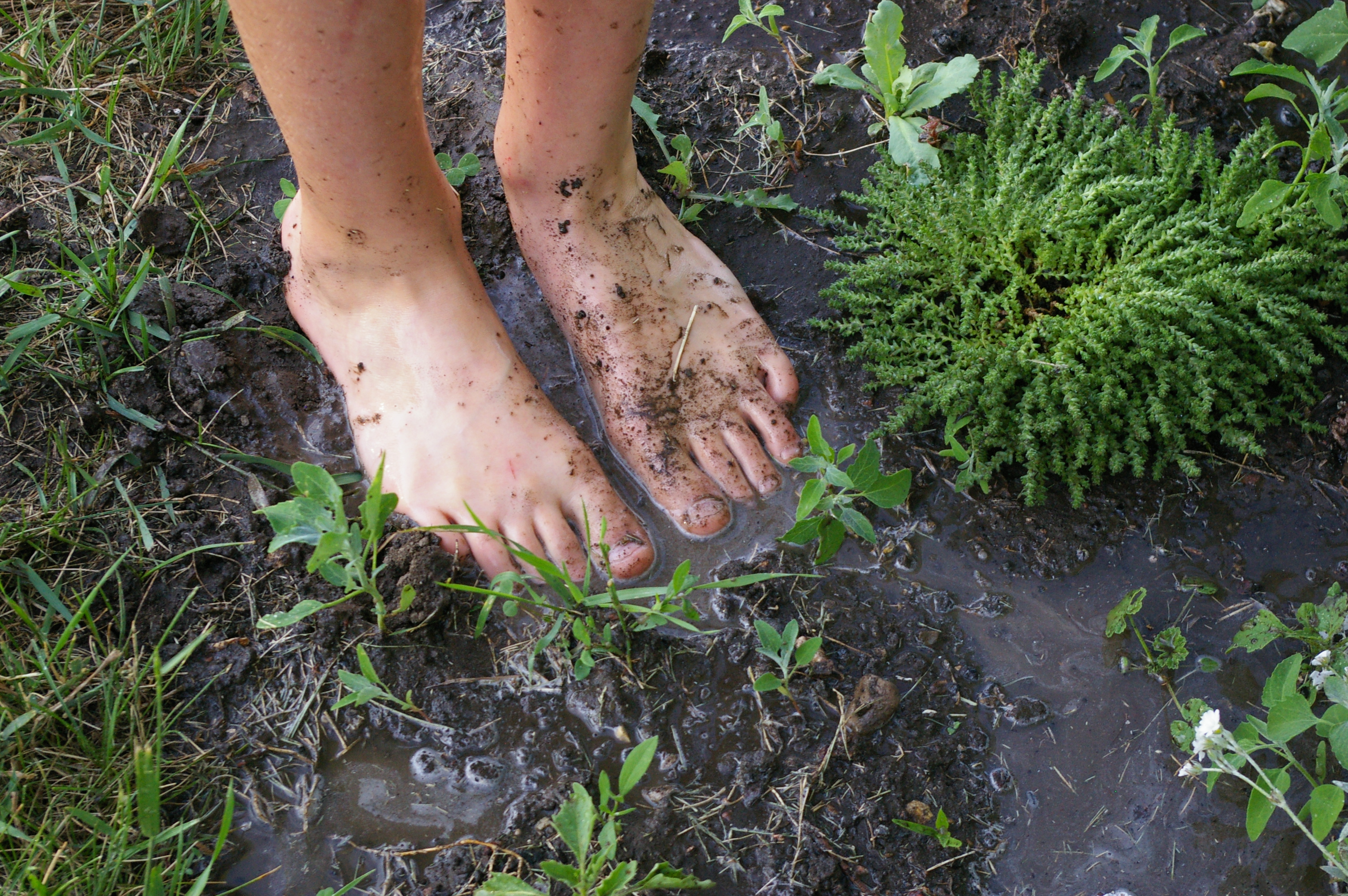
Because we live in houses and work in buildings and drive cars, it’s more important than ever to take the time to get outside, take off our shoes, feel the ground, get some mud or sand between our toes, and connect to the earth. For people with PTSD, this has been found to be extremely healing, helping us feel safe in our bodies, safe on the earth, and more balanced within.

When we are ungrounded, we may feel scattered, unfocused, anxious and unsafe. We may even feel a bit disconnected from our bodies at times, like we’re moving forward, but a part of ourselves is always a second behind, trying to catch up. Finding some time and space to sit and connect with the earth will help center us, help us tame unnecessary thoughts and find the balance we so desperately need.

“Let your roots grow down into God, and let your lives be built of God. Then your faith will grow strong in the truth you were taught, and you will overflow with thankfulness.” ~ Colossians 2:7

The Bible, along with other teachings, has many references to rooting ourselves in faith. Rooting ourselves to the ground, like a tree, gives us a place to grow from. Rooting ourselves gives us a strong base, so that the winds of change and hardship cannot blow us down so easily. Rooting ourselves helps us stay centered in the Divine, pulling up that energy and being a conduit for sharing it with others.

So I invite you to go outside, or go into your body, find a place to connect with the ground and really feel it. Grab a handful of dirt, thank the earth for its gifts, and feel the profound support of God solidly underneath you. Feel the healing love of God through the ground.

“Forget not that the earth delights to feel your bare feet and the winds long to play with your hair.”  ~ Kahlil Gibran

You are Still Beloved.

Victoria McGee

March 19, 2018