
The Power of Forgiveness

“But remember that forgiveness too is a power. To beg for it is a power, and to withhold or bestow it is a power, perhaps the greatest.    ~Margaret Atwood, The Handmaid’s Tale
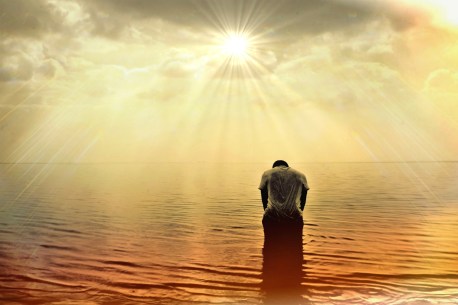
man-888591_1920

This little gem in the pages of The Handmaid’s Tale is profound beyond words. As I sit with it, I scan my heart and soul for places I may be withholding forgiveness from someone.

As it relates to trauma and PTSD, I believe forgiveness is one of the most critical steps in our healing. It’s not a single act, either, but a process. Whether you are forgiving yourself or someone else, it rarely happens in one moment of mercy.

I began the process of forgiving the person who assaulted me soon after the attack. I’m not sure what led me to start working on forgiveness. I think it was a deep knowing that I would never heal completely if I didn’t get myself to forgiveness. I began to wonder what must have happened in this person’s life to lead them to a life of robbing and attacking others. I imagined the worst, and knew it was probably worse than I could imagine. It doesn’t excuse behavior, but it does explain it, and it got me started on forgiveness.

Since then, it’s been an ongoing process. I find that I can only forgive as much as I can in a given moment in my life. I have often felt “done” with forgiving. (There! Yay! All done!) Only to have something trigger my fear or anger again, which leads to bitter feelings, which leads back to another level of forgiveness to work on. I’m not consciously withholding forgiveness. I want to be complete in my forgiveness. But I can only forgive as much as I can in a given moment. And I’ve learned to trust the process and to trust that it will be complete some day. Perhaps even in another life. For there are, as in all our relationships, layers beyond our earthly understanding.

“Forgive others, not because they deserve forgiveness, but because you deserve peace.”                                                                                        – Jonathan Lockwood Hule

What is the cost of not forgiving? Besides delaying the healing of our spirits, there are physical and emotional side effects of withholding forgiveness. Valid science now affirms what spiritual paths have always taught. The only path to peace of mind is forgiveness. According to Johns Hopkins, “Chronic anger puts you into a fight-or-flight mode, which results in numerous changes in heart rate, blood pressure and immune response. Those changes, then, increase the risk of depression, heart disease and diabetes, among other conditions. Forgiveness, however, calms stress levels, leading to improved health.”

We can all recognize the symptoms of harboring resentment, anger and fear. The thought that forgiveness calms our stress levels makes it not only appealing, but critical to moving forward. Haven’t we suffered enough without adding to our anxiety by harboring that ball of bilious bitterness?

To return to Margaret Atwood’s quote above, to withhold or bestow forgiveness is a great power. We can assuage someone’s guilt by forgiving them, or let them suffer, waiting for our forgiveness, wondering when it will come, if it will come. Often, when we withhold forgiveness, the person we’re not forgiving doesn’t even know we are embittered against them! So who is it hurting? Only ourselves. We bring on ourselves all those mental and physical side effects of not forgiving. And as difficult as it can be sometimes, we need to let it go. Not for them, but for us.

“All forgiveness is a gift to yourself.”    ~A Course in Miracles, Lesson 62


There is great power in either bestowing or withholding forgiveness. But only one will bring us true peace.

So how do we do it? How do we forgive? We start by acknowledging that forgiveness needs to happen in order to heal. When I couldn’t think about forgiving, or felt too angry to start, I would pray for God to soften my heart. When I know I’m withholding forgiveness, I pray for God to guide my healing. Guiding my healing will inevitably lead me to forgiveness. And we must turn it over to the Divine, to the forgiveness expert! Daily, hourly if necessary. The Holy Spirit will take our hard spots and soften them, leading us to healing, gently guiding us to forgiveness – to peace. If we but ask.

“If we want there to be peace in the world, we have to be brave enough to soften what is rigid in our hearts, to find the soft spot and stay with it. We have to have that kind of courage and take that kind of responsibility. That’s the true practice of peace.”                   ~ Pema Chodron

You Are Still Beloved.

Victoria McGee

3/19/2017


The Fabric of Our Lives

woman-heart

“My life has been a tapestry of rich and royal hue,

An everlasting vision of the ever-changing view.

A wondrous woven magic in bits of blue and gold,

A tapestry to feel and see, impossible to hold.”

                                                                        ~Carole King

            When I was young and would loudly sing along with Carole King in my room, these words were beautiful. As I grew older, they became profound. Now they bring tears, as they demand reflection. I hope I have many more years to live, and that I can live them awake and aware, knowing that with the good there will be bad, and it’s all part of the tapestry of my life.

Tapestries became popular during the Medieval era, largely because they were portable art, and people and kingdoms often had to move quickly. Originally tapestries told religious stories, then later in life they told tales of romance and fantasy. The process of following a large drawing and transferring that image onto a large, vertical loom is fascinating. The detail work is awe-inspiring. Perhaps our lives are tapestries, the big picture set forth at our birth, the details added as we grow and change.

“We sleep, but the loom of life never stops, and the pattern which was weaving when the sun went down is weaving when it comes up in the morning.”

                                                ~Henry Ward Beecher

Our live are indeed tapestries, each day woven into the existing patterns of the day before, incorporating light and dark, good and bad, fear and safety, life and death. What makes life rich is not to have had only good, safe and happy experiences, but their opposite as well. The contrast in the patterns of the tapestry is what makes it interesting, what paints the picture, what tells the whole story.

As I’ve written in previous blogs, I would not want my traumatic experience to be washed away and taken out of my life’s tapestry. The Dalai Lama once said, “There is a saying in Tibetan, ‘Tragedy should be utilized as a source of strength.’ No matter what sort of difficulties, how painful the experience is, if we lose out hope, that’s our real disaster.”

How do we live through trauma, grief, and sorrow and find our hope again? Through faith. Through turning it constantly over to God to heal. Through trusting the Divine will help us if we but ask. And through looking back at your tapestry so far. Look at how far you’ve come. Really see what you have survived, what gifts it brought you, what strength you gained. Examine the details of your tapestry. What small acts done by you or someone else, wove a new idea into the pattern? What help or compassion patched the place where the threads unraveled? Look at the strength of the whole piece. This has been created by the Divine, and nothing can tear it apart.

“Nature uses only the longest threads to weave her patterns, so that each small piece of her fabric reveals the organization of the entire tapestry.”

                                                                                                ~ Richard P. Feynman

What a beautiful thought! It’s easier to realize this concept when we look at nature isn’t it? The patterns weave together and create the entire tapestry. I am filled with awe when I truly “get” this.

And so we move forward daily, not usually aware, our tapestry growing and changing and becoming richer until the end. So we must accept the entire tapestry, the good and the bad, the frayed edges, and the solid images, the times we were deeply afraid, and the times we were profoundly safe. The times we withheld love, and the times we gave it freely. Accept it, because in the end, what counts is everything, the whole picture ~ the complete tapestry. It’s all part of the fabric of our lives.

“Into Christ’s presence will we enter now, serenely unaware of everything His shining face, and perfect Love.”   ~ A Course in Miracles – WB 157

You Are Still Beloved

Victoria McGee

2/28/2017

THE PRESSURE TO SEEM “NORMAL”

winter-1828780_1920

“In most of our human relationships, we spend much of our time reassuring each other that our costumes of identity are on straight.”   ~ Ram Dass

Here we are again – holiday season. Time to show up at the family table and be “normal.” As survivors of trauma, we can often feel an unspoken pressure to join in at the holidays and pretend we are just fine. I truly hope you are just fine this holiday season, but for those who are not, read on.

I’m going to let you off the hook.

The Ram Dass quote above is so true, isn’t it? We all present these costumes of identity to each other, but when trauma has touched our lives, the costumes change, don’t they? And as profoundly as our friends and family know, deeply know, that trauma has changed us, they still want us to show up and be “normal.” Why?

It’s human nature. Partly, they want to be reassured that the human spirit is unshakeable, that we are strong, that we are “going to get through this.” Partly, they miss us. The old us. The lighter version, the lighter person we used to be. They want a glimpse of that smile, that smirk, maybe the smart-ass humor that indicates you’re still there. They want to feel better about what you’ve been through.

But it’s not your job to make them feel better. It’s your job to heal your trauma in the manner and at the speed that is right for you. So this holiday, give yourself permission to show up and be what is “normal” for you right now.

I remember the first Christmas after I was assaulted. I lived a constant mixture of contradictory emotions: one minute I wanted to do the traditional things and be with family, the next I wanted to do everything differently and be left alone. I would feel profound gratitude swell in my heart only to plunge into hopelessness in the next moment. That was my “normal.” And I remember feeling the pressure to put on a good face and pretend nothing had changed, when everything had.

Hopefully, you will have some time this holiday with people who allow you to be where you are in your healing. And for those who want us to appear “normal” we need to give them a break too. They may not have ever had to walk this path either, and truly don’t know what to do.

“If you are always trying to be normal, you will never how amazing you can be.”   ~ Maya Angelou                                                      

I also remember, as I look around at the holidays, that most people I know have been touched by trauma in some form. Veterans of wars, sexual assault survivors, child abuse survivors, people touched by sudden and traumatic grief. We are all presenting our version of “normal.” We are all doing the best we can. We are human.

The best news about “normal” is how incredibly fluid it is. We always have the capacity to create a new normal, to re-invent ourselves, our beliefs, our attitudes, and become something more than we ever thought possible. And wherever we’re at in our healing, whatever is “normal” right now is perfect in the eyes of the Divine.

So this holiday, give yourself permission to be “normal.” Life is a giant Come As You Are party – Let Go and Let God.

“If your compassion does not include yourself, it is incomplete.” ~ Buddha

You Are Still Beloved.

Victoria McGee

Dec. 19, 2017


Can We Find Peace Without Justice?

case-law-677940_1920

True peace is not merely the absence of tension: it is the presence of justice.” 

~ Martin Luther King, Jr

On a recent visit to the Martin Luther King, Jr. Memorial in Washington, D.C., I was struck by this quote. I stood frozen, reading and re-reading these words. It left me with a question. “Can we find peace where there has been no justice?”

Martin Luther King, Jr. spoke these words in relation to the Montgomery Bus Boycott in 1955. He realized that ending a tense situation in the African American struggle for civil rights was not a true peace. More was needed. Justice was needed.

For me, this quote also applies to the struggle for peace, and longing for justice that is shared by victims of trauma. For many of us, there was no justice. No one was punished. If a price was paid, we aren’t aware of it. The scales of justice can seem forever tipped.

For those who have been victimized through war, or natural disasters, or sudden grief, there is often no single perpetrator to identify or seek justice from. For those who have been victimized by a single person or group, the justice we are afforded on a human level can often seem insufficient. Even if you have suffered through a trial, and the perpetrator is in prison, it will never feel like they are receiving as much suffering as they caused.

All trauma survivors have to come to terms with this at some point: there will be no justice that feels right.

To me, this is because we are spiritual beings having a human experience. Our desire for revenge, to even the score, and to find justice, are human urges. When we allow those urges to quiet down, and focus our minds and hearts spiritually, we get closer to the radical notion that peace lies in letting God take care of the justice.

An eye for an eye will only make the whole world blind.”

                                                                        ~Mahatma Gandhi

What does it mean to let God take care of the justice? It means having trust and faith that there is a Divine Order to the Universe. It means to believe in the laws of karma and trust that they will play out, without creating more karma of your own by seeking revenge.

Karma is truly a reliable law. What goes around, comes around. “That which ye sow, so shall ye reap.” I’ve seen so many examples of it that I have complete faith in it. We don’t always see the end result of karma, but suffice it to say, if someone causes harm, harm will come back on them at some point. Our peace relies on us having faith in this balancing law of the Universe.

For me, this was all I had to rely on. I never knew if the person who assaulted me was brought to any kind of justice. Justice in a legal form was not something I could cling to, so I had to find my own way to justice. Without it, I would have imprisoned myself with hatred.

The more I turned it over to God to provide my justice, the clearer it became I was on the right path. I began to relax into knowing that God is Love and that whatever was for the highest good of all involved is what would happen. It requires such faith at first, but the more I practiced it, the more I had peace around the issue of justice – a sure sign that healing was taking place, and the Divine was leading me home.

This is not to say that wrongdoers should not be dealt with on this earth. But it is to remind us that sometimes justice doesn’t look like we expect it to look, or come in the package we were expecting. And often, people who receive justice find no peace from it. There is more peace in forgiveness, than justice.

So can we find peace where there is no justice? Yes. Because justice is not ours to have or to give. Peace is just a God-thought away.

By acting compassionately, by helping to restore justice and to encourage peace, we are acknowledging that we are all part of one another.”

                                                                        ~Ram Dass

You are Still Beloved.

Victoria McGee

November 6, 2016


This is Your Brain on God

sunset-476465

“We expand what we focus on.” ~ Wayne Dyer

Healing trauma can feel so overwhelming. Good days and bad. Doing the work but not feeling better when we want to. Annoying friends and bloggers telling us to pray. Pray about it. What a bunch of mumbo-jumbo!

It’s not just mumbo-jumbo. Science is now proving that not only does trauma significantly change the brain, but so do prayer and meditation. New research is constantly studying the neuroplasticity of the brain, the ability of the adult brain to change and adapt.

Without getting too technical about parts of the brain, etc. suffice it to say that trauma definitely affects brain function. Brain researcher Viatcheslav Wlassoff, PhD, says this; “It is no use telling them to ‘get over’ it because PTSD fundamentally changes the brain’s structure and alters its functionalities.” In fact, new research in imaging is allowing the diagnosis of PTSD with PET scans, because the changes in the brain are indeed observable.

If you are a trauma survivor, you are probably already aware of this. Your thinking, reactions, and processing of information is different. Your brain has been rewired to some form of protection mode, and God knows we need this. However, functioning long term in this mode is unhelpful and unhealthy.

As science continues to expand in its understanding of the effect of trauma on the brain, so will the treatments available. According to Alexander Neumeister, MD who researches the brain and PTSD, “People with cancer have a variety of different treatment options available based on the type of cancer that they have. We aim to do the same thing in psychiatry. We’re deconstructing PTSD symptoms, linking them to different brain dysfunction, and then developing treatments that target those symptoms.”

There is so much hope on the horizon for the treatment of trauma. But there is also new evidence that we can do simple daily actions that will help our brains recover.

This is where the mumbo-jumbo comes in. God. Yes, focusing on the Divine, prayer, and meditation, will connect new synapses in your brain that will heal, or at least diminish the strength of the changes trauma has created. And science is proving it.

“Be silent, only the hand of God can remove the burdens of your heart.” ~ Rumi

Richard Davidson, PhD, at the University of Wisconsin, claims we can change the brain with training and practice. He’s proven that the thinking brain connects to the emotional brain, so our thoughts can indeed influence our feelings and change how we react to certain stimuli. Quieting our thoughts also has a profound impact. In one study on people meditating for 30 minutes a day Davidson reported, “Just two month’s practice among rank amateurs led to a systematic change in both the brain as well as the immune system in more positive directions.”

Dr. Andrew Newberg, author of “How God Changes Your Brain” says prayer can absolutely heal. His new field, called neurotheology, studies the effect of religious and spiritual experiences on the brain. He has scanned the brains of Buddhist monks and Franciscan nuns. He found that in deep meditation or prayer, the part of our brains engaged in focus light up, while the part engaged in organizing sensory information goes dark. When this part, the parietal lobes calm down, our sense of self diminishes (in a good way) as we feel more oneness.

We’re fascinated by the words, but where we meet is in the silence behind them.” ~ Ram Dass

For people with faith, this research is not a surprise so much as a validation of what we already feel. Focusing on the Divine, prayer, and meditation lead us to feel more whole and healed. For people without faith, this is wonderful scientific evidence that meditation and mindfulness can truly help heal the brain that has suffered trauma. Focusing on the breath, closing your eyes, trying to empty your mind each day will speed your healing.

Whatever our beliefs, knowing that our brains are plastic and capable of change brings hope. Knowing that God and prayer truly do change the wiring of our brain means that we have the tools to begin and extend our healing any time, anywhere.

Knowing that science and the Divine are working together for our benefit is astonishing.

You are Still Beloved.

Victoria McGee

October 5, 2016

Note: I do not suggest that spirituality alone can heal trauma or PTSD. I merely suggest that restoring your faith, and finding a spiritual practice, can enhance effective therapy and assist in post-traumatic growth.


LOVING ACCEPTANCE

“To feel the Love of God within you is to see the world anew, shining in innocence, alive with hope, and blessed with perfect charity and love.” – A Course in Miracles, lesson 189

banner-1022120_1920

I am still beloved. I believe this down to my core. No matter what I may have done or been or survived, the love of God for me is constant. I know God has been there through every trauma, and will be there always. This kind of faith doesn’t come easily, and perhaps you are not there yet. But know that it is true. God sees you perfectly, and God see you perfect.

I can accept this. I can accept that God sees me this way. God is, after all, God. The Divine is Love that is all encompassing and beyond our understanding.

My difficulty is seeing myself the way God sees me.

Does this resonate with you as well? You have a spiritual practice, you’ve survived trauma, you pray and meditate and turn everything over to the Divine – but still, still you judge yourself, withholding from yourself the very thing you need: love and acceptance.

I do it all the time. I’m still learning and trying and growing and becoming. But I know that this step is critical for healing.

When we withhold loving acceptance from ourselves, we set ourselves up for continuous disappointment. We set ourselves up for depression, anxiety and addiction. Seeing ourselves as God sees us leads us out of this cycle.

How do you start? I had to start with others. For a long time, I wasn’t at ease within myself, both because of the trauma I had been through, but also because I regularly withheld love from myself. With a strong desire to heal and change this, I started by trying to see others as God sees them.

This requires such vigilance on our thoughts! We are conditioned from a very young age to make judgments about the people around us based on their appearance, their words and their actions. When we consciously practice looking on others with love, we start to see their innocence. We begin to glimpse what God sees. We grow in compassion and understanding for others.

You are a creature of Divine Love connected at all times to Source. Divine Love is when you see God in everyone and everything you encounter.” – Dr. Wayne Dyer

Non-judgment is a muscle that needs constant exercise. Left idle, it will grow fat cells and spread. Like exercise, it probably doesn’t come naturally to us, so we have to be vigilant and dedicated. And like exercise, it is worth it, for it can be your path to self-acceptance.

Through continuous practice of non-judgment of others, I found it easier to forgive and love myself. I began to see myself as God sees me more frequently. This is a tool for healing that grows stronger the more I practice it. The less I judge others, the less I judge myself.

For some, the path to self-acceptance may start within you and then extend to others. This is also a valid path. And who’s to say you can’t walk both paths at once? There are many paths to seeing yourself as the love of God. The path doesn’t matter, what matters is the dedication to the path and to healing.

Give love to yourself today. Give yourself the gift of seeing through God’s holy eyes. See those around you with those eyes. Look within and truly see your glorious light of Love.

You, yourself, as much as anybody in the entire universe, deserve your love and affection.”                 Buddha

You are Still Beloved.

Victoria McGee

05/15/2016


A New PTSD

“To feel the Love of God within you is to see the world anew, shining in innocence, alive with hope, and blessed with perfect charity and love.” – ACIM, Lesson 189

butterfly-14041_640

See the world anew. What a concept. What a challenge. What a daunting task some days. We often go through so many days in a row that all feel the same, a little numb, a little tired of the day-to-day business. With PTSD, we are tired of summoning courage each day, tired of fighting down the fear each day, and tired of swallowing down the rage.

I don’t know about you, but I can’t live like that. I can’t. I made it my daily task to find something, anything, each day that gives me hope. There is no surviving PTSD without it. And here’s the tricky part: it is as easy as shifting your focus, and it is as difficult as shifting your focus. Ha.

Because some days shifting our focus is easy, right? We have that attitude as we set out on the day, and the universe rewards us with baby birds, friendly cashiers, compliments from strangers, hugs from kids. And we sigh and say, “I DO have hope. Life is good. Things are getting better!”

Then there are the days when, try as we might, our focus won’t budge off the damn trauma. We could encounter the same rewards as before, but they would seem trite, ordinary, meh. Right?

Don’t despair on those days. Our healing minds and spirits are like muscles. I learned this trying a new exercise where I got into position, then the instructor said, “Now, lift your leg.” My leg wouldn’t budge. She immediately, wisely said, “If your leg won’t lift, imagine it lifting, and do the count.” I did. I did this for two more classes. On the third class, my leg lifted.

So on those days when we are trying to shift our focus and it doesn’t feel like it’s working, we are still actively engaging that part of our minds and spirits that so deeply desire to heal.

In the spirit of seeing the world anew, I recently decided I needed a new meaning for the acronym PTSD. Not to dismiss or belittle my trauma, but to transmute it, as is always my goal.

So here it is:

Pray

Transform

Surrender

Deepen

These are the steps I take, almost daily, to heal.

Pray – Prayer is action. Prayer is never static. It is a dynamic way to engage your spirit with the Divine (from whom you are not separated anyway!) When I feel helpless, prayer is my catalyst to act.

Transform – If you’re stuck in an emotion, identify it so you can transform it. If you’re anxious, it is fear. If you’re depressed, it could be unexpressed anger, which stems from fear. A Course in Miracles, and many spiritual paths, state there are really only two emotions: fear and love. To transform fear in any form, you must love. Love yourself, those around you, pets, God, find someplace to send love. Love will return to you a thousand-fold.

Surrender – Surrender to God. Surrender to your feelings. And it’s okay to surrender to your trauma in order to heal it. You can accept it by surrendering to it. It happened. Now surrender to the Divine for your healing.

Deepen – Truly healing from trauma means to confront ourselves and our fellow man on a truly profound level. If you just try to get on with your life, without a thoughtful examination of your life and your psyche, your trauma will revisit you. This healing must be deep. Take a full breath and dive in. Reflect on each day and deepen your awareness of your healing.

That is my new PTSD. It feels active and loving. I hope you find some healing there too.


You are Still Beloved.


Victoria McGee

2/10/2016

Happy Holidays from PTSD

“In the depth of winter, I finally learned that there was in me an invincible summer.”                      ~ Albert Camus

rainy-83136_1280

Whatever your spiritual beliefs, we recognize that December is a time of holidays and religious and family gatherings. While those around us look forward to the delights of this season, survivors of trauma often find this a difficult time to navigate. Whether you suffer with PTSD yourself, or live with someone who does, it’s important to be prepared and know that whatever you bring to the season is enough.

For some survivors of trauma, the holidays may be good. For me, it was a rare opportunity to sleep deeply, without fear. For others, the holidays themselves may be when their trauma occurred, and the fight or flight instinct is awakened, despite their best efforts. As we are surrounded with images of love and light and innocence, we may re-experience the grief our trauma brought us; of never quite feeling that profound sweetness of innocence again.

Though that may be true, and we may indeed be changed in irreparable ways, we can still find hope in taking charge of our perspective, in taking care of ourselves, and in taking control of our holidays.

“The depth of the feeling continued to surprise and threaten me, but each time it hit again and I bore it…I would discover that it hadn’t washed me away.” – Anne Lamott

Anne Lamott so perfectly expresses what we trauma survivors know too well. The surprise and fear that feeling something so deeply can bring. It’s like being in the ocean. The same water that lets you float suddenly grabs you and pulls you under!

But we rise again to the surface and discover, “…it hadn’t washed me away.” If we can keep acknowledging that, each time we have a flashback, or a bad day, or a bad night – we haven’t washed away. We are here, and we are doing the very best we can.

If the holidays tempt you to feel struck down by waves (of memory, of family, of expectations, of anxiety) take time to notice that you are not washed away. Keep your perspective focused on your progress. You are here and you have gifts yet to give.

Next, take care of yourself. This is non-negotiable. As a survivor of trauma, you need to be doing this anyway, but even more so at the holidays. The holidays may hold more triggers for you than at any other time of year. If you are not rested, mindful, healthy and balanced, triggers will sneak up on you. Be your own best friend. Don’t neglect the Divine, or the Divine in you, for the sake of pleasing others. Show up when it feels right, and you can bring your best self. If you’re in doubt, ask yourself if a holiday experience is going to drain you, or fill you up? Honor the answer you receive.

Finally, take control of your holiday. If crowds give you anxiety, avoid big parties or malls. If big family dinners are difficult, perhaps join with a smaller part of the family for breakfast, then find a place to be of service instead, perhaps a holiday meal for the homeless. You may need to create new rituals to honor where you are in your healing. For some, there is a need to be with family. For others, there will be a need to serve. Some will feel the old familiar need to isolate, but I urge you not to. If you need isolation and alone time for balance, make time for it, but avoiding the holidays altogether will not serve your highest healing. And that is what the Divine wants for you.

Perhaps all we need to do during the holidays is focus on the best ideology of this time of year. Give to yourself and each other: Peace, Light, Hope, and God’s Love.

“This Christmas, give the Holy Spirit EVERYTHING that would hurt you. LET yourself be healed completely that you may join with Him in healing, and let us celebrate our release together by releasing everyone with us.”  ~A Course In Miracles

Take good care of yourself. Find in yourself, your “invincible summer.”

You are Still Beloved.

Victoria McGee

12/06/2015


TRAUMA & RESTORING FAITH

“Faith is not a belief. Faith is what is left when your beliefs have all been blown to hell.”
~ Ram Dass

forest-764924_1920

All who have survived trauma know well the feeling of the broken spirit. The loss of faith that comes with having your belief system ripped out from under you.

How can trauma survivors come to a place of restoring our faith? Our faith has been built over time as we live and construct in our minds the things we believe in. Trauma can shatter those beliefs in an instant.

In her amazing book, Trauma and Recovery, Judith Herman, M.D. addresses the issue of faith. She states “(Traumatic events…) violate the victim’s faith in a natural or divine order and cast the victim into a state of existential crisis. “

In other words, we begin to question everything we have come to know.

Herman goes on to state the depth of this loss of faith.

“In situations of terror, people spontaneously seek their first source of comfort and protection. Wounded soldiers and raped women cry for their mothers, or for God. When this cry is not answered, the sense of basic trust is shattered. Traumatized people feel utterly abandoned, utterly alone, cast out of the human and divine systems of care and protection that sustain life.”

Let’s re-read that last sentence: “…cast out of the human and divine systems of care and protection that sustain life.”

There is nothing more profoundly despairing than that feeling. To feel abandoned by the Divine is a trauma in itself and leads to the disconnection that is such a hallmark of PTSD. So how do we begin to rebuild our faith?

It is important to distinguish between faith and belief. Beliefs are products of our minds. They are decisions we have made, constructs we have formed to make sense of our world. We believe in God, in certain people, in certain relationships.

Faith is a product of the spirit. Faith is the abstract knowing that the Divine is constant. When there is a crack in that knowing, what can heal it? When there is a tear in the fabric of faith, what will mend it?

After 9/11 there was a wonderful quote by Mr. Rogers going around. His advice in times of extreme trauma was to “Look for the helpers.” This is a start in restoring our faith.

If you have survived a trauma, you were likely helped, if not immediately after, then soon after. Look at those helpers. For me it was kind police officers, a calm and soft-voiced trauma nurse, and my friends who came in the middle of the night without asking why I needed them, they just came. When I looked back on all that, it made a few stitches in my torn faith. I could trust the goodness of those people, and they had faith in me that I would survive this. It was a start.

Who were your helpers at the time of trauma? Who around you still holds you up?

“The Lord is close to the brokenhearted and rescues those who are crushed in spirit.”   ~ Psalm 34:18

Another way to restore your faith is to simply ask. Ask God to restore your faith. We can do nothing apart from God. We can’t restore our own faith by ourselves. Sit in quietness and solitude and ask. Gather with others and ask. God will begin to show you the constancy of Love. God will lead you beside still waters and restore your soul. You will begin to see examples of Divine Love that will make you smile, knowing it’s another stitch in your torn faith.

For me, the final step in restoring my faith was through service, and I wish I had come to it sooner. When you want to curl up in a ball and feel abandoned, take action instead. Get out of yourself and find a way to help others as soon as you feel able. It is like a salve to your wound. Compassionate action opens the way for the light to return. Imagine a sky that is all gray clouds, except for one hole where sunlight is breaking through. That is what service will do for your faith.

An added by-product of service is seeing your value in the world again. Sometimes trauma can leave us feeling powerless. Service restores our faith, not only in God, but in ourselves.

I leave you with this inspiration from Walt Whitman:

“The question, O me! so sad, recurring –

What good amid these, O me, O life?

Answer.

That you are here – that life exists, and identity;

That the powerful play goes on,

and you will contribute a verse.”


Have faith. You are Still Beloved.


Victoria McGee

11/29/2015


What’s in your Cloud?

“Be miserable, or motivate yourself. Whatever has to be done, it’s always your choice.”                                                                                                                                           – Wayne Dyer

sky-690293_1920

What are you storing in your cloud? What are you uploading? What are you downloading? How do these choices affect your life every day? How does it affect the next moment?

Long before the cyber age we’re living in, we all had a Cloud. We still do! The database we carry around, filled with thoughts, feelings, memories, plans for the future, hopes, and dreams. We call it our Mind.

Unlike the Cloud, which is just for accessing stored files, our Mind can also discern, choose, evaluate, create and invent! Those are the amazing gifts of our Mind.

But like the Cloud, we have the ability to choose which files we upload, and which files we download. This is an incredible choice and gives us full power over what we think about, and how we feel. Of course with great power comes great responsibility. (Peter Parker) So when we come to fully realize that only we have full power to engage our Cloud and focus on certain files, we can either celebrate in that knowledge, or cringe from its horror!

Some of us who struggle with PTSD have files that would horrify other people. Trauma that is our own personal heart of darkness. So every day we have this choice. Which files do we download? Which files do we keep in the Cloud, and for how long?

PTSD can feel like a broken record. The same files keep downloading. Even when we try to think about something else, to create something new and good, the old file shows up again. Where’s the pop-up blocker for the trauma thoughts?

Dr. Wayne Dyer said, “Initiate a habit of choosing thoughts and ideas that support feeling good and powerful and elevate you to a higher level of consciousness.”

Who wouldn’t do that if they could? Ah, but you can, grasshopper. The key word is habit!

Too often we feel helpless to these intrusive files. But the more often we practice not reacting to them, but calmly saying, “Not now,” and sending them back to the Cloud, the easier it gets, and the less they “pop up.” It takes practice. Mind practice.

Have you ever had the cascading pop-ups on your computer screen? That’s what those intrusive thoughts can feel like. And what do we do when that happens? We usually have to re-start. Same with our Mind. Re-start, and then install an anti-virus.

For me, the anti-virus is God. I could not control these thoughts, my Mind, the Cloud, without calling on God’s strength, mercy and grace. For if I cannot love these thoughts away, God can. Only the thoughts of God can “elevate you to a higher level of consciousness.”

The more of the strength and faith in the Divine I can upload into my Cloud, the more power I have over negative downloads.

Of course the negative files exist, and there are times and places they need to be downloaded and dealt with, but it needs to be of MY choosing, not random.

There are also times the negative files will keep popping up because we need to deal with something. Often, it’s when we need to do the next healing step, and that’s okay. Just listen to your instinct. You will know when the pop-ups are unnecessary, and when it’s time for an “operating system update.”

The choice is always ours. Even when it doesn’t feel like it, just try it! Own it. Choose it.

A Course in Miracles sums this up beautifully:

“And so again we make the only choice that ever can be made; we choose between illusions and the truth, or pain and joy, or hell and Heaven. Let our gratitude unto our Teacher fill our hearts, as we are free to choose our joy instead of pain, our holiness in place of sin, the peace of God instead of conflict, and the light of Heaven for the darkness of the world.”                                                                                      -A Course in Miracles, Lesson 190


Never underestimate the power of your thoughts.

What are you uploading?

Keep throwing light on the darkness.

You are Still Beloved.

Victoria McGee