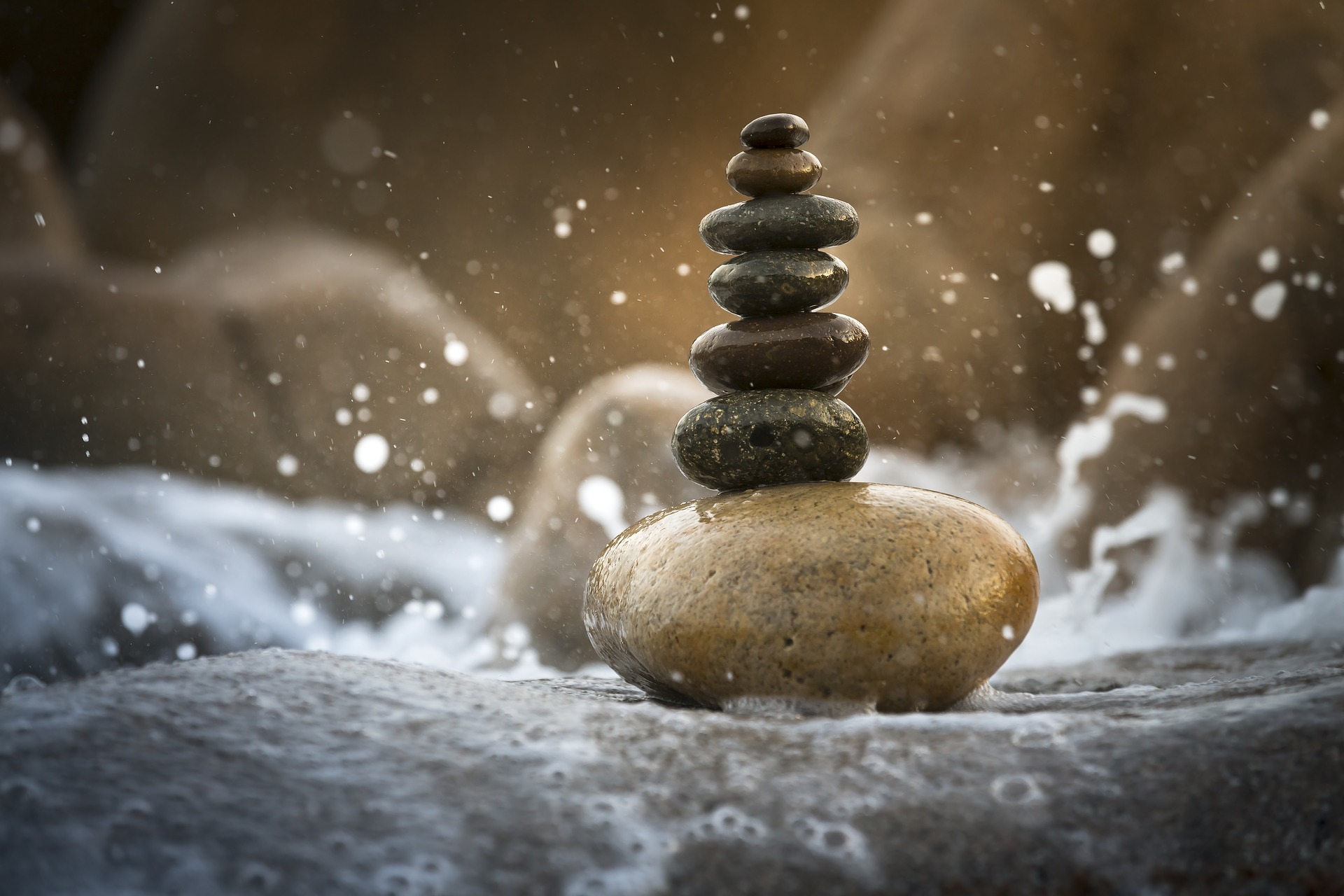
How Faith Helps Us Build Capacity

Image by StockSnap via Pixabay

“I found it strange, yet perfectly balanced, that I needed my wounds to heal my faith, and my faith to heal my wounds.” ~ Rumi

Building capacity has become a buzz-word within organizations the last decade, seeping into other areas like physical and mental health. When I first heard the phrase about ten years ago, I found it confusing, seeing the word “capacity” as a measurement of volume! Of course its root is the word “capable” and that’s what helped me get less confused. Building capacity means building capability.

Formally, capacity building is the process of developing the skills, knowledge, tools and resources an individual or organization needs to be able to function effectively, sustainably, and adapt to change. This applies to constant growth and learning, challenging yourself and reflecting on your progress. I think, most importantly, it’s about developing resources. One of those resources for me is my faith.

It’s tricky when we seek to blend faith with mental health.  Previously, both Freud and Skinner disparaged reliance on religion or faith, seeing it as a weakness. However, research is showing that for some, a spiritual belief system is not just important to their mental health, it just might be an undervalued resource.

In the Handbook of Adult Resilience (edited by John W. Reich, Alex J. Zautra, and John Stuart Hall, 2010), researchers note “(Religion) may establish a foundational meaning system that orders the individual’s understanding of the universe and particular events.” In other words, our faith can help us make sense of events, perhaps leading us to meaning-making sooner rather than later when we go through dark times.

One criticism of faith held by Freud was that it was a crutch, something people leaned on to avoid meeting an issue or catastrophe head on. However, in the Handbook of Adult Resilience, a summary concludes, “These studies make clear that religious people do not generally bury their heads in the sand or wait helplessly for someone else to solve their problems. In contrast to these stereotypes, the empirical evidence suggests that religious people are generally actively engaged in dealing with their personal tribulations. Moreover, their religiousness may enhance such efforts.”

“When we reach the limits of our own strength, and courage, something unexpected happens. We find reinforcement coming from a source outside of ourselves. And in the knowledge that we are not alone, that God is on our side, we manage to go on.” ~ Rabbi Harold Kushner

The research also showed positive results in aspects of resilience and in spiritual transformation. They found that as these resources of faith sustained people in times of trouble, their certitude that faith is a valuable tool grows. In short, people showed that faith strengthened stress-related growth! Faith actually helps us build capacity. It helps us deal, and it helps us adapt, and it helps us grow.

I only cite these findings to uphold my own personal experience. That when I’m literally brought to my knees by life events, I have found my faith to be a source of comfort and strength, simultaneously being held AND pushed to grow!

In our old house, there was a short hallway with closets on both sides between the primary bedroom and the bathroom. Three times in my life I have completely surrendered in that spot, wailing with grief and anger and despair. Even after we remodeled that area, I went to the same spot, because it had been sanctified by my tears. My complete surrender, (dumping out all the emotion, crying out to God all the questions and all the accusations and all the anguish), cleansed my spirit and allowed a kind of grace to come in that wasn’t possible when I was holding so tightly to my desolation. Then, my faith begins to comfort me.

Where do I find faith? Personally, I find it in writings from great spiritual teachers, and in nature. You might find it solely in the Bible or the Koran, or wherever your heart is touched. If you have trouble with religion and faith feels elusive, turn to nature. Nature continues despite everything. Seeds become trees, insects busy themselves composting and pollinating, mountains stand for centuries. There is comfort in that continuation. You, also, will continue.

As a child, my family would often go camping in the Rocky Mountains in Colorado. I remember even as a little girl being so in awe of the grandeur of the mountains and the perfection of nature. I felt one with the earth and the nature surrounding me. It gave me knowledge I have carried with me; that things may go horribly wrong, there may be enormous grief, or earth-shattering trauma, but if I am of nature, I will persist.

When I look back over my life, I see how I constantly, sometimes subconsciously, kept building that resource of faith. Bad things do happen to good people. Bad things just happen. Faith can help us through those times and become a reliable tool in our box of resources. I just have to remember to bring that tool out first, and it will support my other resources on the journey.

Every time we face a difficulty we have a choice. The opportunity is there to build capacity and to develop belief in our own capability to deal, adapt, and grow. I encourage you to bring faith into that process.

“People who pray for miracles usually don’t get miracles, any more than children who pray for bicycles, good grades, or good boyfriends get them as a result of praying. But people who pray for courage, for strength to bear the unbearable, for the grace to remember what they have left instead of they have lost, very often find their prayer answered.” ~ Rabbi Harold Kushner

The Mosaic of a Fractured Soul

Image by LoggaWiggler from Pixabay

“Beautiful mosaics are made of broken pieces.” ~ Lori Jenessa Nelson

Trauma, grief, anxiety, the events of our lives often leave us feeling like our soul has been fractured. We feel scattered, like shattered pieces of ourselves have been chipped away and flung helter-skelter. We are broken.

No one gets through this life without experiencing devastation and loss. It’s part of the human experience, as much as joy, love and accomplishment. That doesn’t make it any easier. How do we find the strength and courage to pick up these pieces and try to put ourselves back together?

One piece at a time.

“You are not shattered; you are a breathtaking mosaic of the battles you have won and the love that you are.” ~ Unknown

One broken piece at a time we begin to see where each piece might fit. Even as we grieve for what is no longer whole, we eventually start to try to put our life back together. Of course, what we put back together is not the same. It will never be the same. But it can become a mosaic, a new, functional creation that will have its own beauty.

In my own life, after a profound event, it’s the simple things that start to put me back together. Brushing my teeth, taking a shower. Cup of coffee? Yes, I like coffee. “I’m a person who likes coffee – ah! there’s a piece of who I am. I’ll place it here.” Here’s my cat. Yes, my cat. “I’m a person who likes cats. This piece belongs here.”

And eventually, we get to acceptance of ALL the pieces. Grief? Yes, I’ve felt deep grief. “I am a person who has grieved profoundly. Oh look – this can actually fit here, and it’s part of the whole.” Trauma? Yes, I’ve experienced trauma. “I’ve been a victim of assault. (Do I have to include this piece?) Yes, because look what other pieces fall into place because of your healing. Yes, yes, include it all!”

“We are mosaics. Pieces of light, love, history, stars. Glued together with magic and music and words.” ~ Anita Krizzan

Ultimately the mosaic, like our entire being, is a composite of our entire life, and all of our experiences! We eventually place the good pieces right next to the bad pieces, like complementary colors on the color wheel. Because this is the whole of our human experience. The key is acceptance. If we don’t accept what has happened in our lives, we continue to beat our head against a wall asking “Why?” And the only answer is “Because you are alive, and shit happens.” We are on a planet full of terrible things happening all the time. The odds are we will be affected at some point. When we are, we need to grieve, cry, be angry, feel all the feelings, but then accept; this happened. Only then can the pieces start to look like a new pattern, a new hope.

“The moment that judgement stops through acceptance of what it is, you are free of the mind. You have made room for love, for joy, for peace.” ~ Eckhart Tolle

Constructing the mosaic of our experience is our life’s work. Sometimes we are re-shattered and must start over, and that mosaic will be different from the last, and so on until our last breath. Our souls were not made to lie scattered on the floor. Our souls were made to guide us to our healing, to our wholeness. Ask for guidance. God will show us where to start. Spirit will help us look back in awe at the mosaic of our life so far, and marvel at the beauty, the aching beauty of it.

“Hold fast to whatever fragments of love that exist, for sometimes a mosaic is more beautiful than an unbroken pattern.” ~ Dawn Powell

Victoria McGee

09/09/25

The Soul Wound of the Pandemic

Image by Marcos Cola from Pixabay

            Do you have time to read this? Can you take a breath and give yourself a pause? Did you read more often during the pandemic? As I’ve grown busier this past year, I’ve noticed a certain dark comfort in getting back into the routine of being productive, rather than just being. Dark because something feels unresolved.

            A lot of us who survived the pandemic have moved on – maybe too quickly? We want to distract ourselves from what we’ve been through and return to some sense of “normal.” Of course we do. Besides the pandemic, we were experiencing profound racial injustices, unprecedented political division, and for many there was also job loss and food insecurity. Anxiety was at an all-time high. We needed to grieve. We needed to breathe. At the same time we needed to take deep breaths, we were masking! How could we stop and grieve when we were consumed with wondering if we would survive?

I see in our society both an individual and collective soul wound from the pandemic. The earth can’t lose that many souls, and endure so much friction and strife without us feeling it on a cellular and spiritual level. Isn’t it important to take the time to grieve this moment in our history?

Unlike some traumas that are sudden and unexpected, the pandemic crept up on us. There was no moment of shock, just a growing sense of danger, followed by feelings of dread. Then when the statistics started being reported we had no way to gather and mourn. We had no balm for the grief in the usual ways – rituals, funerals, gathering together to share the loss. No way to support the bereaved or honor the dead. Grief requires a witness. We were isolated.

And this grief is ongoing. One study estimated that for every person lost to Covid, there are nine grieving loved ones who were close to them. In the US alone, nearly 2.0 million people have died from Covid to date. (https://www.cdc.gov/nchs/nvss/vsrr/covid19/index.htm)

Multiply that by nine and the amount of grief walking around is staggering.

Within these statistics are also so many personal griefs within the statistics. Not being able to attend funerals, celebrations, travel to help out family members, students who lost two years of peer socialization and academics, people who lost jobs and housing. The losses are many and grave.

So, how do we move forward? How do we heal this soul wound and move forward? Can we grieve what was lost, while keeping the good that may have been gained by slowing down? The key is to do it mindfully. Move forward, yes, be busy if you find it helps, but dedicate some time to paying mindful respect to an unforgettable period in our lives.

As with all grief, ritual and reflection can help us with this. Now that you can travel, visit the family and perhaps memorials of those you may have lost. If you don’t know anyone personally, there are webpages dedicated to those who were lost. Visit them and pay respects.

In private, light a candle, say a prayer, acknowledge what the world has been through and your part in it. Perform some kind of service work in honor of those who died. Plant a tree or a garden to commemorate the years of lockdown, and to symbolize hope for the future.

Write about your own journey. How did lockdown effect you? Did it change you in any way? Did it change others in your circle? How did you handle the fear and anxiety of lockdown? Did you get Covid? What was that like for you, what were your emotions around it? Did your faith or beliefs change during this time? Do you have a new normal? Spend some time in deep reflection on this! Writing your own history during this time will be fascinating for your descendants to read some day as well!

Sometimes, we simply need to acknowledge what we’ve been through. And we have all been through a lot. Not as much as first responders and front-line workers, who showed up and cared for us no matter the risk to their own health! Saints one and all. But still, as a collective, we have been through a lot!

So take a moment today to connect with your soul. Breathe in, place your hand on your heart, and let yourself grieve. It’s okay. It was a lot. Feel it a little at a time. Then take another breath and fill your lungs with courage and faith. Here is a guided meditation for you to try.

Today I quiet my mind, taking a moment to acknowledge what I have lived through. I know it’s something I will always carry, and I know it has changed me in ways seen and unseen. I recognize and accept the loss and grief of this human experience. I will seek some joy and gratitude today as I ask God to help me move forward mindfully, cognizant of the grief, and hopeful for better days.

CLING TO YOUR LIFE RAFTS

It’s a typical day; walk the dogs, do a little work, eat a little lunch. I’m floating along – gently down the stream. Then something knocks me underwater. It could be a text, a phone call, or a triggering news story. I’m sick to my stomach, spiraling inside myself, my heart rate increases, my breathing becomes shallow – and just like that, I’m in survival mode. Will I fight, fly, or freeze? The answer often depends on how quickly I engage one of my life rafts.

In the world of trauma healing, the term “window of tolerance” is important to understand. This is a concept developed by Dr. Dan Siegel, which suggests we have an optimal arousal level within parameters that allow for the ebb and flow of life. So the “window” is this area in the middle, where we can tolerate a certain amount of ups and downs without too much trouble. But certain life circumstances, or triggers, can throw us out of our window. Then we enter states of hyperarousal (fight or flight), or hypoarousal (freeze).

I recently heard Dr. Albert Wong, Director of Somatic Psychology at JFK University, refer to my previous state of mind as being on a “surfboard of stability.” This is being in the window of tolerance. Things feel fairly stable and manageable in life! But this is life, and we will from time to time get knocked off that surfboard.

When this happens, I do what I would do in the ocean, or a lake; I find a life raft to cling to.

Falling out of our window of tolerance, professionals in the field of trauma treatment suggest we compile resources to help us find our way back to a more manageable place. I call these resources my life rafts, and I cling to them when I get knocked off my surfboard.

Resources are varied and individual. You have to try some of them out, keep some, discard what doesn’t work, but it’s crucial that you identify what works and use it! Here are six general categories for you to start lashing together your own life rafts.

People – Form a raft thinking of the people who can help you self-regulate. This could be a trusted friend, maybe a family member, or a therapist. Think of a figure who is protective of you, who has your back, and who listens and helps without judgment. Perhaps you have someone in your life who is a wise mentor, who you can turn to for advice. Or maybe it’s someone nurturing, who will offer tender care and comfort. Make a list of these people in your life. You might have a mental list, but when you write it down and see the support available to you, that alone can be calming.  

“I always felt that the great high privilege, relief and comfort of friendship was that one had to explain nothing.” ~ Katherine Mansfield

Places – Sometimes a life raft of places, or a place, can provide the resources we need in times of struggle. And they can be real or imaginary! Maybe you have a favorite spot in a neighborhood park, or a view you can get to easily that calms you. It often helps to sit by a body of water when you can, or perhaps you like an indoor place. In my old house, I had a crying hall where I felt held and safe. In my mind, when I’ve needed a safe place, I go to a place from my childhood – it was actually an irrigation ditch, but we called it “the creek.” In my mind I lean against the big oak tree, take in the tire swing, dragonflies, and remember the simplicity of that time. Decide if a place can be a life raft for you. Describe it, and write what it is about it that comforts you.

“Someday you will find that place- a place that provides you peace, brings you serenity, and heals your sanity.” ~ Simran Noor

Grounding Activities – Any activity that helps you feel grounded and centered is a life raft! This could be mindfulness, meditation, yoga, or breathing exercises. When grounding, it’s helpful to actually be on the ground if you can. I once heard a yoga teacher tell us (sitting on the ground) to “wick up” energy and nurturing from the earth. The image of myself as a lantern wick, pulling UP support from the earth was very grounding, and I use it to this day! Grounding activities are good if you’re in hyperarousal as they can help you regulate your breathing, lower your blood pressure, and shift your focus to manageable tasks. For me, grounding is one of the best life rafts I have, and the best part is I can do it anywhere, any time.

“By grounding yourself in mindfulness early in the morning, you are reminding yourself that things are always changing, that good and bad things come and go, and that it is possible to embody a perspective of constancy, wisdom, and inner peace as you face any conditions that present themselves.” ~ Jon Kabat-Zinn

Objects – This is another useful life raft, utilizing familiar or comforting objects that bring you a sense of peace, calm, or even amusement. An object can be anything that helps you stay in the present moment or serves as a talisman or touchstone. It can be anything from a stuffed animal to a treasured rock, a t-shirt, or a piece of jewelry. I have a fused glass necklace with my father’s ashes in it – I wear it when I need to feel his wisdom with me. I have several heart shaped rocks I use, and holding one always grounds me and helps me find my way. Beloved pets can also be life rafts (I would put them on the raft in the People category, but that’s just me!), because they offer unconditional love and often intuitively know when we need them. Gather the objects of your life raft in one place and acknowledge their importance in your healing.

“An object is just an object until you – or someone else – Infuses it with meaning and energy.” ~ Maia Toll

Activities – If you’re in hypoarousal (wanting to curl up in a ball under the covers) it can help to get active. Hypoarousal can feel like you’re in a boat that’s stuck on a sand bar, but the activity life raft can lift your spirits and help you not feel quite so helpless with whatever is going on.  It can be difficult to gather up the energy to start, but I encourage you to try! Because getting active in whatever way makes you feel good can be a quick way to return to regulation. Some ideas include music, humming, dance, hike, play a sport you like, or simply create – whether it’s art or yarn or craft projects or home projects – the activity raft can help get you unstuck!

“There is no healthier drug than creativity.” ~ Nayyirah Waheed

Engage your Spirit – Whatever your faith or belief system, the life raft of Spirit can quickly restore balance. When I fall out of the window of tolerance, either into hyper or hypo arousal, centering myself in Spirit offers stability and comfort. For me, turning to the Divine, turning over my feelings of panic or hopelessness, turning over my triggers and fears, is necessary to maintaining my healing. I spend time communing with Spirit, sometimes calling on the ancestors for care and wisdom, and I soon feel that support – the buoyancy of being held up out of the water, where I can breathe, and the knowledge that I will never be allowed to drown. How do you engage your spirit when you’re out of your window of tolerance? What can you rest in that comforts you? Create a simple mantra you can use to engage your soul quickly when needed.

“All through your life your soul takes care of you…your soul is alive and awakened, gathering, sheltering and guiding your ways and days in the world. In effect, your soul is your secret shelter.” ~ John O’Donohue

So, gather your resources. Don’t panic when you fall off your surfboard of stability. These are six ideas to help you get started. Try them out, see what helps. Invent new ones that work for you!

The important part is to have them! If you’re trying to live life and heal trauma without resources, it’s like going camping with no supplies. You will get desperate and ingest things (thoughts, food, drink) that aren’t as good for you.

We call on these resources; people, places, grounding, objects, activities, and Spirit as healthy ways to cope. And we slowly return to our window of tolerance, and float again – merrily, merrily, merrily, life is but a dream.

Guest Post – Wellness Guide for Healing and Mental Fortitude

by Guest Writer Michelle Peterson

Photo via Pexels

In the journey of healing from trauma, self-care emerges as a beacon of hope and resilience. This exploration into self-care’s transformative power reveals how adopting such practices can profoundly bolster your mental health. Self-care isn’t just an act of indulgence; it’s a vital strategy for enhancing your life’s quality, offering a buffer against the hardships that life often presents. In this guide, presented by Victoria McGee at Still Beloved, we’ll look at several things you can do to take care of your physical and mental wellness while healing from trauma.

Building a Bulwark Against Burnout

Self-care serves as a crucial shield, safeguarding you from burnout and exhaustion. It’s about understanding your limits and granting yourself permission to step back and rejuvenate. By regularly engaging in self-care, you create a resilient foundation that supports you, enabling you to navigate daily challenges with renewed energy and a calmer mindset.

Refining Self-Care in Remote Work

For those working from home, optimizing your self-care routine can be transformative. Simple yet impactful actions like letting sunlight into your workspace or using a lamp that mimics natural light in darker months can uplift your mood. These small changes can significantly boost your mental clarity and overall well-being, even in the confines of your home.

Enhancing Cognitive Sharpness

Engaging in self-care activities that focus on mental rejuvenation can remarkably enhance your cognitive functions and concentration. Activities that relax the mind, such as meditation or hobbies that you enjoy, can increase your focus and productivity. This sharpening of your mental faculties is a testament to the power of self-care in enhancing brain health.

Financial Well-being Through Home Economics

Managing financial stress is a vital aspect of self-care. Exploring options like home refinancing can alleviate financial burdens, creating a more peaceful mental space. By lowering monthly expenses, you not only ease monetary stress but also open up avenues for investing in other areas of self-care and mental well-being.

Prioritizing a Healthy Lifestyle

Investing in a healthier lifestyle is a cornerstone of self-care. Making choices based on thorough research about health-centric products and practices can lead to a more fulfilling and content life. By focusing on quality and effectiveness, you nurture your body and mind, paving the way for enhanced well-being.

Addressing Emotional Scars

Self-care is essential in your healing process from emotional wounds and trauma. By creating a personal sanctuary, you provide a space to confront and soothe your emotional scars. This self-care journey leads to significant personal growth, helping you become stronger and more resilient. Through this process, you find strength and healing, emerging as a more robust version of yourself.

Fostering Happiness and Contentment

Regular self-care routines significantly boost your happiness and life satisfaction. Engaging consistently in self-care creates a positive feedback loop in your life. This cycle begins with you taking care of yourself, leading to increased joy. This joy then further motivates you to maintain your self-care practices, enhancing your overall well-being.

Enhancing Social Bonds

Through self-care, you enhance your emotional stability, a key factor in maintaining healthy social relationships. Your journey towards emotional resilience, fortified by self-care, expands your ability to connect and nurture your relationships. The quality of your social interactions and connections improves significantly as you grow stronger emotionally. This growth in emotional strength, fueled by self-care, positively transforms your social life and interactions.

Self-care is crucial in your healing journey from trauma, far beyond a mere luxury, it’s essential for your mental health. By embracing self-care, you’re not just choosing temporary relief, but committing to a path where well-being and joy become enduring aspects of your life. As you prioritize self-care, you’re actively shaping a life filled with greater peace and happiness. Your dedication to self-care transforms it into a powerful tool for sustained mental and emotional resilience.

Victoria McGee offers Reiki healing sessions and spiritual consulting for those looking to enhance their mental and physical wellness. Visit Still Beloved today to learn more.

Spiritual Bypassing in Trauma Healing

Image by Anke Sundermeier from Pixabay

I’ve seen the term “spiritual bypassing” tossed around a lot lately. Although the term was first coined by psychotherapist John Welwood in the early 1980s, it’s gained public awareness due to a combination of the growing spirituality movement, and also social media quotes and memes. It’s definitely something I’ve experienced and anyone healing from trauma needs to be aware of it.

Spiritual bypassing is defined by Welwood as “a tendency to use spiritual ideas and practices to sidestep or avoid facing unresolved emotional issues, psychological wounds, and unfinished developmental tasks.” Often, people aren’t aware they are sidestepping or avoiding dealing with issues, they truly believe applying spiritual practices solely will provide complete healing. To say “Everything happens for a reason” or “Heaven needed another angel” might give momentary comfort, but it doesn’t deal with, or in any way heal, the kind of deep mental and emotional wounds we suffer in this human life.

As much as I write about including the soul in healing trauma, the key word is “include” which means “involve as a factor.” It doesn’t mean rely on solely! My faith and spiritual beliefs have certainly helped me heal trauma, but they are not enough on their own. I had deep family and relationship issues, traumatic events, and profound grief to deal with. These mental and emotional matters required skilled psychotherapy, and I’m forever grateful to the therapists I’ve worked with over the years. Without their guidance and insight, I would never have made the progress I have!

Soon (literally days) after I was assaulted, a so-called spiritual teacher led me on a guided visualization to a safe space, where she suggested I picture my attacker and offer forgiveness.

I can’t tell you the damage this did. I was young, so of course I put my trust in an older, wiser person. But this was not the time for me to move into forgiveness, delay my rage, and stuff down my hatred. I had been violated and did not feel safe in the world. If I felt rage, I thought “No, this happened for a reason. It will make me stronger.” If I felt unsafe, I thought “No, you need to trust that God will keep you safe.” (Btw, where was God when it happened?)  If I felt hatred, I thought “No, I need to forgive.” I thought of myself as spiritual, therefore I had to respond spiritually.

Thankfully, I quickly moved into therapy where my very human feelings were validated. Not just validated, but exhumed, released, and poured out into that safe space. Not only that, but I learned about trauma, trauma responses, PTSD, and that everything I was feeling, or would feel, was a normal response to an abnormal situation. Good therapists teach us about ourselves and the human condition! My healing journey continued with therapy and my only prayer became, “Help me heal.” Later, years later, there was eventually forgiveness, but it was for my own sake, so I could move forward.

Spiritual bypassing can delay deep mental and emotional healing. Unless you work with a skilled therapist to look at your issues head on, spiritual platitudes will only sustain you for so long. According to Gail Andrews, LCSW (@mentallywellish), “Spiritual bypassing is an egoic denial that keeps the trauma pushed down and unattended. When this happens our souls ache and we may even scramble for more spiritual guidance, inspiration and direction. The cycle persists – and the work of the soul is actually denied.”

I don’t know about you, but I can be the queen of avoidance. And I will use spirituality to avoid dealing with issues that confront me. Typical avoidance tools are work, busyness, scrolling, gaming, cleaning, streaming, eating, caring for others – but it’s important to include spiritual bypassing in this list. Are you diving deep into a spiritual or religious practice, only to find yourself empty and hurting when you’re not actively worshipping or praying? This is a clue that you need therapy in conjunction with your practice. Something is remaining unhealed, and to attempt to heal the soul without healing the mind is like wrapping a broken finger without a splint. It will heal, but it could heal straighter and stronger with more effort put into the treatment.

In conjunction with this, there is evidence that spirituality itself can actually have a positive effect on your mental health. Lisa Miller, professor of psychotherapy at Columbia University has done research with brain imaging that recorded how spiritual thoughts effect the brain. The region of our brain that is associated with emotional and sensory processing actually calms when we recall a spiritual experience. What gurus and mystics have always known – quieting the mind, spiritually sitting, praying or meditating – protects our mental health.

I saw a meme recently complaining about people saying “My trauma made me stronger.” Some find this kind of thinking problematic, especially people with CPTSD, victims of childhood abuse.  I understand what they mean. It can feel like spiritual bypassing. A better option would be “Healing trauma made me stronger.” It’s not like trauma was a choice. The choice lies in our healing – how we choose to heal, how soon, and how we navigate moving forward. My hope is that we continue to find the overlaps and helpful tools within therapy and spirituality. For me, working these two paths together was necessary in healing trauma – doing one without the other would have delayed my growth, both as a person and as a soul.

Do you have experience with this? What are your thoughts about this topic?

Therapy as a Sacred Act

Image by Benjamin Balazs from Pixabay 

“Your sacred space is where you can find yourself again and again.” ~ Joseph Campbell

Whatever is sacred to you can move you toward your truest self. It can open you to discover your truest purpose. Entering into a sacred space allows you to stop distracting yourself with the stuff of life, and center on what is important, and what is healing.

I’ve found this to also be true of psychotherapy. A course of therapy with a gifted clinician is an absolutely sacred act. It is intimate. It is soul-baring. It is getting to the raw marrow of your life and learning how it made you, and also what you may become. A good therapist helps you activate your own capacity to heal.

Before I go further into this, please know if you have suffered any abuse while in therapy or with a counselor of any kind, this article will obviously not speak to you. I wish you deep healing from any situation of that sort. I am honoring good therapy and therapists, and hoping that those thinking about going to therapy will be encouraged.

Entering into a sacred state is, to me, what we do when we start a journey into psychotherapy. We come into presence with another entity whose sole purpose is to receive us unconditionally, look at our wounds with compassion, offer tools and comfort for healing, and encourage us to see ourselves as worthy and capable. In many ways, therapy is teaching us to see ourselves as God sees us, and use that vision to effect change.

Therapy, to me, can be likened to a sacred act in these ways: it requires a safe space, trust, ritual, and surrender.

“The soul is the sacred space where my head and heart meet, where God lives.” ~  Brene Brown

A good therapist creates a safe and sacred space where the client feels able to be open and honest. Your stories are safe with your therapist. (They are only required to share information if they determine you are a danger to yourself of someone else.) Stepping into your therapist’s office should feel like stepping into a sanctuary, where you are accepted exactly as you are. This feeling takes time to build between client and healer, but once established, it becomes a space with its own energy and dynamic that exists only between the two of you. Perhaps like your own private relationship with God, this safe space is where you find relief and release.

This safe space is not established without trust. Trust, of course, takes time, and is built by your therapist truly listening, remembering from session to session what you’re working on, and also being clear with boundaries for both of you. There must be a solid foundation of trust for real therapeutic work to take place. One of the ways therapists build trust is with almost a sacred contract, that during your time together they will be reverently dedicated to you and your healing. Like a prayer, you can lay your burdens down and trust you will be supported in your struggle.

“Ritual cuts through and operates on everything besides the ‘head’ level.” ~ Aiden Kelly

Therapy also has a ritual aspect to it that rings of something sacred. The same time, each week, is set apart for the specific activity of healing the self. New things are brought and discussed and discovered, but the time, the space, the people are the same and that sameness also builds the trust and feelings of safety so crucial to the ability to be open and honest with your therapist. Keeping the routine, trying to keep the appointment at the same time and day each week is an important ritual. Ritual helps us relax into the unknown by providing solid ground to rely on.

“There is no greater agony that bearing an untold story inside you.” ~ Maya Angelou

Finally, surrender is crucial, both in therapy and in the realm of the sacred. We know when life brings us to our knees in total surrender, that is where we often find God. We surrender to the process life has in store for us and give our troubles over to be healed, our weary souls to be soothed. So it is in therapy. We surrender the hidden, the unspeakable, the ugliest memories, the darkness. We speak it out loud so it may be heard and healed. By giving it over, and giving it a voice, it becomes manageable. But not until we surrender it into capable hands. Surrender brings relief.

If you’ve worked with a good therapist, I’m sure this resonates with you. If you’ve been thinking about entering therapy, that’s a good sign that you should explore it. And if it helps you to think of it as a sacred act you can do for yourself, to bring yourself closer to a healed vision you’re holding onto, then enter that sanctuary and exhale. Breathe out what you’ve been holding and find healing.

Victoria McGee

1/28/23

Because I survived trauma

Image by Kei Rothblack from Pixabay

Because I survived trauma, I often find it hard to sleep.

Because I survived trauma, I double check all the windows and doors and lock them, even in the middle of the day, with two large dogs, just to take a shower.

Because I survived trauma, I jump at sudden noises and movement.

Because I survived trauma, I sometimes wake my husband in the middle of the night groaning in a night terror.

Because I survived trauma, please don’t ever jump out and surprise me because I will leave my body for a while.

Because I survived trauma, it is sometimes difficult to completely relax or feel safe – anywhere.

Because I survived trauma, there are times I will cry and mourn for who I was before; the person who felt safe in the world.

Because I survived trauma, my moments of joy are dampened with caution.

Because I survived trauma, I sometimes fluctuate between being hyper-alert, and numb.

AND

Because I survived trauma, I found inner strength I wouldn’t have found otherwise.

Because I survived trauma, I learned about healing and courage and grace.

Because I survived trauma, I discovered that forgiveness really was something I had to do so I could move on.

Because I survived trauma, I viscerally realized that anger could be a healing agent when used correctly.

Because I survived trauma, I turned to God in a more profound way than I ever would have without it.

Because I survived trauma, I assembled a toolbox of meditation, spirituality, journaling, therapy, and mindfulness that helped me survive other, lesser traumas in my life.

Because I survived trauma, I made the surprising discovery that service to others is a powerful balm for traumatic wounds.

Because I survived trauma, the tools of self-awareness, self-compassion and self-care are at the forefront of my daily ritual. I deserve nothing less.

Because I survived trauma, I changed the course of my life and sought to teach and inspire and empower young people.

Because I survived trauma, I became an alchemist, transmuting the bad that had happened to me into a fireball of motivation to live well in spite of it.

Because I survived trauma, I gained wisdom I wouldn’t have learned any other way.

Most profoundly, because I survived trauma, over time, I gave birth to a deeper version of myself.

You are Still Beloved

Victoria McGee

11/14/2021

FINDING THE BALANCE

Image by Quang Nguyen vinh from Pixabay

“Life is a balance between what we can control and what we cannot. I am learning to live between effort and surrender.” ~ Danielle Orner

I have lived a while, and I’m wise in many ways, but being human means I struggle with finding balance every single day. Being spiritual, living on the Earth in 2021, constantly barraged by media, social media, and bleak news in the midst of a global pandemic, balance often eludes me. And I see it in those around me, as well. We are, after all, in this together.

But I know that without balance, I will fall into depression. If I’m only turning toward the flash, the shock and awe, I miss the constant glow of the Divine. And that is where my saving grace abides!  So how do we find balance? How do we avoid the abyss?

So many of my friends have expressed in the past few years how difficult it’s been to stay informed, but not drink from the firehose. We’re concerned about so many issues right now, and as the world has become more accessible to individuals, it means we also know more. There is more to be concerned about, more to feel compassion for, more to make our hearts heavy. How do we fall asleep at night knowing what we know? Covid, Syria, climate change, school shootings, earthquakes, homelessness, floods, uprisings, unstable governments – I could fill this page. And of course, it’s important to stay informed, but it’s also important and appropriate sometimes to turn away.

I don’t mean completely turn away from pain and suffering, especially if you can help. What I mean is it’s crucial to turn your thoughts away sometimes so your heart can remember its essence, so your soul can recover and reboot. Think of the news or doom-scrolling as ice cream. You can only have so much before you start to feel sick.

“Do not wait for leaders: do it alone, person to person. Be faithful in small things because it is in them that your strength lies.” ~ Mother Teresa

I had a day recently of feeling so angry. In our county, we had been doing better with Covid, but then the Delta variant showed up, the vaccine breakthrough cases were starting to be of concern, and we had to end and cancel several events and gatherings as our county reinstated a mask mandate. I was so angry that some people’s choices were impacting the quality of life for so many, and even causing illness and death. I was so very pissed off!

Anger is certainly warranted in many situations, and just because I call myself spiritual doesn’t mean I can’t get angry – anger is part of the human existence – but I also know that staying in a state of anger helps no one. I stumbled through the rest of that day, but the following morning my rested mind returned to the three things that help me find equilibrium again when I’ve turned toward the suffering in the world for too long with no counterbalance.

The first of these is gratitude. Yes, it’s been said before but it really is true and it really does work. Putting myself in an extreme state of gratitude helps me let go of bitterness, pettiness and even rage. When I think of the things I’m most grateful for (my home, my husband, my son, my sister-friends) I feel my heart and soul start to reset. I turn toward gratitude and breathe it in.

“If you go off into a far, far forest, and get very quiet, you’ll come to understand that you are connected with everything.” ~ Alan Watts

The second is nature. Spending any time in nature actually effects stress hormones, and helps us appreciate what is good in this world. Even if you don’t have a beautiful yard or outdoor area, just a local park or community garden can help you connect with the natural world and ground yourself. Sitting outside at night, spending time with the moon and the stars, realizing how small we are in the vastness of the universe is also healing. Play with your pets, nurture your plants, dig in some dirt, watch an ant colony at work – you will feel balance creeping in as you turn toward the miracles around you.

The third is to remember who you are as a spiritual being, a child of the Universe. My mantra the past few years has come from Ram Dass. “I am loving awareness.” When I am angry, frustrated, distraught with the world, chaotic within myself, this phrase brings me home. Sitting quietly, focusing on the breath and repeating this to myself, I remember my essence. I begin to feel filled with spirit rather than fear.

My job is not to fix the world, but to fix myself so I may better serve those around me. I cannot do that if I am out of balance. So some days I will turn away from the suffering and turn toward the love and grace of God, because I cannot be of help if I’m upset – I cannot pour from an empty vessel. Together, may we find balance moving forward. The world needs us to.

“If you restore balance in your own self, you will be contributing immensely to the healing of the world.” ~ Deepak Chopra

You Are Still Beloved

Victoria McGee 9/23/21

Pandemic Progress – Healing the Collective Wound

“Healing is not an overnight process; it is a daily cleansing of pain, it is a daily healing of your life.” ~ Leon Brown

I used to bide my time in quarantine wondering what life would be like when the pandemic was over. And though it’s not over, and in many regions, it is far from over, here in the United States there are glimmers of us coming out the other side. But what are we evolving into? It is becoming increasingly clear that we are not and will not ever go back to life as we knew it. Not completely.

As much as I like to imagine us all tiptoeing out of hiding like the Munchkins, with Glenda singing “Come out, come out, wherever you are,” followed by a happy chorus of “Ding Dong the pandemic is dead!” I know it’s going to be a lot messier and slower than that.

We have all been through a collective trauma, and trauma requires healing. Not healing on the back burner, but daily, active healing on the front burner. And it will not happen overnight. In her book, “The New Normal,” (highly recommend!) Dr. Jennifer Ashton compares the pandemic to an asteroid hitting Earth. That’s a good analogy. It’s a global catastrophe. It happened. It changed everything. And recovery from the fear, the monumental grief, and the loss of trust in the stability of life is something we will be healing from for a very long time.

Remember? Remember how we were just going along, living our lives, and then we heard rumors about a virus. “Oh, that’s happened before. They’ll get a handle on it, they always do.” And then, boom! Everything is closed. You must stay home. Wear a mask. Wear gloves. Wipe everything down. Wait, people are dying? How many? Oh my God. Oh my God.

And then the months of waiting, and surges, and horrific strains on our medical professionals, and farmworkers, and grocery store employees. Unbelievable images on the news, funerals on zoom if at all, loved ones sick and dying – alone.

And now here we are looking ahead to literally taking some deep breaths without masks. Getting vaccinated – moving forward. But where is forward? Where will these changes take us? Who will we be on the other side? Figuring out where we will end up depends on the care we take as we emerge.

“I think it’s important to realize that you can miss something, but not want it back.” ~ Paulo Coelho

Healing from the pandemic will be like healing any trauma. It will not be linear. It will be circular, up and down, two steps forward, three steps back. Slowly, slowly, trusting the world again. In our favor is the fact that we have survived thus far. We bring all that we have learned from the pandemic with us. We bring the gratitude, the healthier prioritizing, the appreciation of leisure and nature, the perfect simplicity of connecting with a friend, perhaps the self-knowledge we have gained.

As we move forward, we probably feel we can’t trust the future, but we know we can trust our own resilience. Look at what we have been through! Don’t underestimate it. Day to day it can feel sort of okay, but take a moment to really look at where we’ve been, what has been lost, and what has changed. Our resilience is stronger than ever. Our ability, individually and as a society, to adapt and change has never been challenged so tangibly in our lifetime. We have risen to the call. We have helped neighbors, worked food banks, stayed connected, grieved with each other, and cried and held each other up. We have prayed like never before.

We have also learned who and what we can trust in outside of ourselves, and this alone could be vastly different than before the pandemic. These are not light lessons. These are life lessons, deep and long-lasting, and we couldn’t have come to them any other way.

We have truly formed new neural pathways in our brains by surviving this era. Pathways that help us heal trauma, that help us tolerate change and adapt to it, and that will help us achieve our new normal.

“All of Western medicine is built on getting rid of pain, which is not the same as healing. Healing is actually the capacity to hold pain.” ~ Gabor Matè

The healing will be slow. It will take time to learn to trust being with others again. We will definitely tiptoe into this world, not like Munchkins, but like the wounded beings we are, cautious but oh, so hopeful! Although we won’t return to exactly the way things were before, we have the opportunity to build back differently, perhaps more carefully and more thoughtfully than ever before. I’m not ready to hold hands for this, but I will walk beside you.

You are Still Beloved.

Victoria McGee

5/14/21