THE VALUE OF ANGER

Screen Shot 2016-09-01 at 12.48.38 PM

I have not lost faith in God. I have moments of anger and protest. Sometimes I’ve been closer to him for that reason.” – Elie Wiesel

Trauma, PTSD, and traumatic grief are breeding grounds for anger. Our sense of unfairness, our indignation at being victimized, our outrage at the victimization of those we love is a fertile field for growing and maintaining anger. And rightly so. We should be angry – to a point.

I believe that anger is a necessary part of our healing process. Without it, we can find ourselves stuck, or it can rear its head at a seemingly unrelated matter. One of the most profound quotes on this I ever read was in a book called Women, Anger and Depression, by Lois Frankel. “Anger turned inward is depression.” I had to spend a lot of time with that thought. Anger and depression seemed like opposite feelings to me. How could they be the same?

Survivors of trauma often suffer from depression. The reasons are obvious, but look at the relationship of anger to depression. If indeed anger turned inward in depression, who has more right to claim this emotion than us? Childhood abuse, domestic violence, rape, veterans of war, people who have suffered traumatic acts of nature, been in serious accidents, and slogged through grief: what do we have in common? We are angry. And we were often silenced in the midst of our trauma. So the anger became stuck, as it had no release. We are often like the radiator of an overheating car. If we allow the anger to fester, it will turn to disease. But if we can lovingly and safely find a way to let it out, it can be one of our most useful tools for healing.

                        “The cure for pain is in the pain.”   ~ Rumi

I am blessed to live in Hawaii and recently took a trip to the Big Island, where a lava flow is currently entering the sea. I felt strongly compelled to go and witness this up close, so I took a sunrise boat tour to see the lava up close. I was not prepared for the feelings that overtook me.

The lava flow on this particular morning was a mile wide stretch along the coast. Pockets of fiery lava burst from freshly formed rock, steam spewing forth as it came in contact with ocean water. As I viewed the lava flow, I was filled with such reverence. There is something so primal about seeing new land being created before your eyes. I felt perfectly in tune with God, with nature, with Pele, the Hawaiian volcano goddess, and with a knowing that I have no words for.

IMG_0367

It’s almost impossible to see living lava and not think of anger. It is everything we associate with anger: red, fiery, hot, unpredictable, passionate and explosive. Lava is often destructive as well.

However this lava, as it encounters water and cools, becomes new land. As its old form burns away, the new form takes shape. As the fire surrenders to the water, it finds a new purpose.

So it is with us. For anyone with PTSD, any survivor of trauma, we have a right to our anger, but we must lay it down at some point. Anger can be a motivator, but once it propels us out of depression, we must let it go. Like the primal lava, it cannot be useful to us until it is cooled. Then, and only then, can we build upon it.

“The true hero is one who conquers his own anger and hatred.” ~ Dalai Lama

We are entitled to our anger. But we are obligated as spiritual beings to heal it and let it go. Humanity needs us to keep reaching for love, forgiveness and peace of mind.

Ask the Divine today to show you how to use your anger, how to find the value in it, and how to let it go. Carl Jung said, “What we resists, persists.” So dig deep, gather your angels, and turn your anger into something new, something useful.

You are Still Beloved.

Victoria McGee

9/1/2016


Patching Ourselves Up

“Frequently, as so many of our poets and psalmists and songwriters have said, the invisible shift happens through the broken places.”   ~ Anne Lamott

Screen Shot 2016-08-09 at 3.58.55 PM

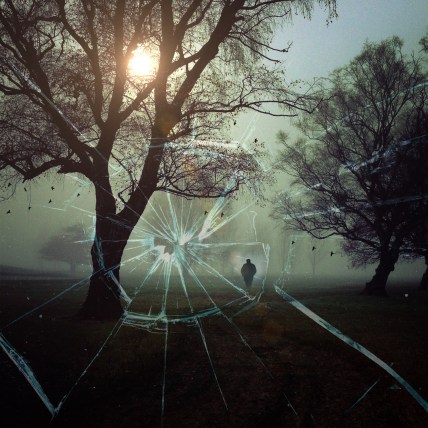
What a beautiful thought. The shift happening through the broken places. As we seek to heal our trauma, to find the balm that will soothe our raw wounds, we often find ourselves feeling broken. We feel broken at the point of trauma or the memory of the trauma. We feel broken in relationships or in our ability to show up every day. We can even feel the deepest wound; that our spirit is broken.

How can we heal our broken spirits? How can we patch ourselves up enough to get our life back on track? How can we show our wound to the world?

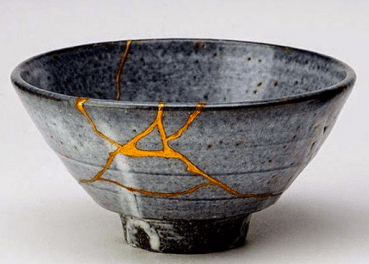
I recently learned about a beautiful Japanese art of repairing broken pottery called Kintsugi. Broken pottery pieces are fixed with a lacquer that is mixed with a precious metal such as gold or silver, so the location of the repair is quite visible. The meaning attached to this custom is that the repair becomes part of the history of the piece of pottery. Rather than discard a beautiful bowl because it is broken, the repair becomes part of the story of the bowl. There is no attempt to hide the break. In fact, it becomes luminous.

Screen Shot 2016-08-09 at 4.09.07 PM

So it is with us. How many times have we tried to glue an object together, trying desperately to hide the breaking point, only to have it split apart again? How many times have we tried to glue our life back together, hide our wounds, only to have it split apart again? It seems we have a resistance to accepting that the damage happened, so we try to mask it. What if we practice Kintsugi on ourselves? Honor our wound by illuminating it?

“The wound is the place where the light enters you.”   ~ Rumi

This thought from Rumi echoes the essence of Kintsugi. A wound, a trauma, can be our opening to receive God’s Love. When we try to patch it up and pretend it isn’t there, we don’t leave ourselves open to true healing. If we honor our wound and slowly repair with golden light, the wound becomes a part of who we are, not a tragic scar we must hide.

This is not to take away the earth-shattering traumas we have dealt with in our lives. And it isn’t a thought you can come to quickly or even soon after a trauma. It took me many years to come to a point of accepting my wound. It took much soul-searching, spiritual reading, therapy, and Divine love for me to see that this repaired vessel is just as beautiful as before, and that the wound doesn’t detract from the beauty within, but deepens it.

            “It is not the wound that teaches, but the healing.” – Marty Rubin

Let us patch our wounds today with golden light. Let us patch them with the pure Love of God. Let us look at them with new eyes and stand in awe of our ability to heal.

You are Still Beloved.

Victoria McGee

August 4, 2016

Screen Shot 2016-08-09 at 3.58.14 PM


Healing is Perception

aware-1353780_1920

            Everything is either an opportunity to grow, or an obstacle to keep you from growing. You get to choose.                                  ~Wayne Dyer

I’ve been going on walks lately, grateful to live in a quiet neighborhood where I can truly just listen to nature when I walk. When I lived in a busier place, I tried wearing headphones for music, just to block out the street noise. But I couldn’t. And I still have a hard time with headphones. As many years as it’s been since I experienced trauma, I still have to be able to hear my surroundings at all times.

This is just another “gift” from traumatic stress. It’s not hyper-vigilance any more, but it is vigilance, and I suspect I will always have it. And I’ve decided that’s okay.

Meditating on this thought, I realized that someone on the outside might think I’m not healed. Not truly healed. But I realized that just as our traumas are deeply based in our perception, so is our healing.

I perceive I am healed, therefore I am.

At least for now.

Because I am entwined in a relationship with the Divine, I have complete faith that as I am ready for another level of healing, the opportunity to experience that healing will present itself. Healing is fluid, it is constant, it is a very real field of vibrational energy. And because it is a part of God, healing will never abandon us.

So the burden on us, then, becomes accepting where we are in our healing, and accepting that healing is never done.

            I do not at all understand the mystery of grace – only that it meets us where we are                                but does not leave us where it found us.   ~ Anne Lamott

Some people I hear from who suffer from PTSD just want to be done with it. They want to be healed and over it and never have to think about it again. This is not only impossible, but leaves no room for God to take our hand and lead us to healing. I completely understand. At one point, I was hoping someone would invent a pill or a surgery that could remove select memories from the brain! What I would have missed in terms of growth had that been possible, is beyond my comprehension. I’m not the same person I was before, thank God. Through healing from trauma I was led to greater growth than I would have sought on my own.

In his book Upside, The New Science of Post-Traumatic Growth, author Jim Rendon quotes Rachel Yehuda, director of the Traumatic Stress Studies Division at the Mount Sinai School of Medicine. She says,” Trauma causes change. There are a lot of opinions out there about how that change manifests, but you just don’t stay the same. That is a really radical idea. You do recover in some ways, but that recovery doesn’t actually involve returning to the baseline. It involves recalibration towards something new…”

Yes, “recalibration!” That is exactly what it is. We have to accept that we will not return to who we were before. We have to reframe our self-perception and move forward with our new, fragile self, holding tight to God. There comes a day in post-traumatic growth where you realize you will never be the same, and that it’s okay. You will recognize your “new normal” when you reach it. Time and therapy will get you functional. Faith and acceptance will help you more fully heal.

            If your compassion does not include yourself, it is incomplete.     ~ Buddha


It’s important that we accept ourselves exactly where we are in our healing. Uncomfortable in crowds? That’s okay. Need a light on at night? That’s okay. Need to check all the locks three times? That’s okay. We have suffered a trauma and whatever we need to do to feel safe and secure is okay. There may come a time when we don’t feel the need to do those things, but there may not; and that’s okay too.

Our trauma is our own. Our healing is also our own. No one can walk in our shoes or judge where we “should” be in our process. Love yourself right where you’re at.

God does.

You are Still Beloved.

Victoria McGee

July 13, 2016


Restoring Faith in Our Fellow Humans

         Healing does not mean going back to the way things were before, but rather                   allowing what is now to move us closer to God.  ~  Ram Dass

disc-445271_1920

When we see horrific events in the world, we know there are personal traumas taking place around those events. The news only gives us facts, but for those of us who have survived trauma, we know the story doesn’t end when the news is over.

We know those who survive will suffer post-traumatic symptoms to some extent. We know they will need to seek healing. We know the road is long and for every two steps forward, there are often several back. We pray they will heal.

Within this healing is the need to restore faith in our fellow man. It is profoundly sad when we fully realize that there are people in the world who would do us harm (or harm those we love). This realization shakes us to our core. It makes us fearful and unable to trust. This fracture in all we have previously trusted needs to be consciously mourned.

Those of us who have suffered trauma, been a victim, or witnessed atrocity, need to mindfully mourn the loss of faith in our fellow man, even as we work to restore it.

Often, this grief is the cause of the depression we suffer with afterward. Sometimes we are so focused on our specific trauma we forget that we have witnessed a breach against humanity on an acute level. Take time to mourn this loss of faith.

Of course, we can’t let this loss of faith in our fellow man immobilize us. There is evil in the world. There are always those humans who inflict pain and suffering on others. They are usually those who have had great pain and suffering inflicted on themselves. This does not excuse their actions, it merely explains it. So how do we move past this loss of faith and find a new foundation to build upon?

            You must not lose faith in humanity. Humanity is like an ocean; if a few drops of the ocean are dirty, the ocean does not become dirty.   ~ Mahatma Gandhi

The journey in restoring our faith in humanity is as unique to us as our trauma. However, these steps can universally heal us and guide us on the road.

Mourn the loss of faith in your fellow man – We must feel the depth of this transgression and what it means to us. Were we hurt by a friend, a parent, a stranger? We need to acknowledge the effect this loss of faith has had on our relationships before we can move to healing.

Ask the Divine for opportunities to restore your faith – If we but ask, God will send us the people and situations we need to restore our faith and reframe our thought patterns. I was so mistrusting following my attack, but God kept sending me angels to help me heal. A few times the angels were in a similar form to my attacker, which I really didn’t appreciate.(!) But it gave me the opportunity to come face to face with a certain physicality and move past the past. Continue to look for the good in people.

Be of service – Service is our quickest path to healing. Getting out of ourselves and helping others can restore faith like no amount of praying! As we see others benefit from our help, we begin to see the glimmer of hope and the flicker of faith.

So let us recognize that our faith in humanity has been profoundly shaken, but let us mourn it so we can move beyond the grief. The world needs our light and our faith.

            We are all broken. That’s how the light gets in. – Ernest Hemingway

You are Still Beloved.

Victoria McGee

06/25/2016


LETTING GO OF SUFFERING

People have a hard time letting go of their suffering. Out of a fear of the unknown they prefer suffering that is familiar.” Thich Nhat Hanh

dandelion-463928_1920


I once had a therapist explain to me why I was drawn to a certain individual. A person with whom my interactions were not healthy, reminding me of the power struggles between my mother and me. She simply said, “You’re drawn because it feels familiar. It doesn’t feel good, but it feels familiar.” It was so profound! It didn’t feel good, but I knew how to play that game, how to navigate that river, and how to survive it.

So it can be with our trauma related feelings. We sometimes cling to them unknowingly, not because they feel good, but because they feel familiar. We know how to feel those feelings; we don’t know what lies ahead.

Are we getting something out of holding on to these feelings, and if so, what? Is there a payoff here we’re not seeing? The answer to that is as individual as all the beings on the planet! The real question to ask is “What am I getting out of holding onto this suffering?”

To answer this for yourself, look at the flip side of some of the symptoms of PTSD. Do I use my suffering to isolate from others? Do I use my suffering to avoid crowds or family events? Do I use my suffering to avoid relationships?

All of these questions have to do with avoidance. I completely get it. And I venture to say that for many people, myself included, avoidance is part of the initial healing. In my struggle, I had to find a balance. I didn’t feel safe going out, but I also had to re-learn that I could be safe at home. There was some avoidance, but also some pushing through to get to the new normal.

However, when this behavior and these beliefs linger for too long, it is time to take a hard look at what you’re getting out of this suffering. I wish I could tell you how long is too long, but it is, again, extremely individualized. My advice is to ask a trusted friend or therapist. They will tell you.

“If you are suffering in your life right now, I guarantee that this condition is tied up with some kind of attachment to how you think things should be.”     ~ Dr. Wayne Dyer


The toughest question keeps many trauma survivors stuck: Do I use my suffering to gain sympathy and pity from others?

This one is tricky, because it’s most tempting to the ego. If you have been attacked, abused, raped, in a war, devastated by an accident or an act of nature, you deserve sympathy. You have survived something most people never have to experience. You’ve been through trauma; you are changed. It’s appropriate for people to extend sympathy to you, and for you to receive it. Just be very aware of your response to sympathy. If you notice the compassionate coaxing or outright pity of your friends or family makes you feel loved, you’re on a slippery slope. The ego eats this up, turning your efforts to gaining sympathy, which will keep you from healing. If you find yourself drawn to this form of suffering, actively find ways to serve others. It will take you out of wanting sympathy for yourself, and give your spirit new purpose.

There were many times in my initial years of healing that I used my suffering as an excuse, a reason to isolate, and a point of sympathy. But each time, it held less power and attraction. It began to feel more and more false as I grew in my healing, until it dropped away entirely. Using the trauma to deepen my suffering was more costly than moving on from it, doing the work, and finding happiness.

Besides, the real work is not surviving the trauma, it’s healing the trauma.

The wound is the place where the light enters you.”   ~ Rumi

You are Still Beloved

Victoria McGee

April 3, 2016

A New PTSD

“To feel the Love of God within you is to see the world anew, shining in innocence, alive with hope, and blessed with perfect charity and love.” – ACIM, Lesson 189

butterfly-14041_640

See the world anew. What a concept. What a challenge. What a daunting task some days. We often go through so many days in a row that all feel the same, a little numb, a little tired of the day-to-day business. With PTSD, we are tired of summoning courage each day, tired of fighting down the fear each day, and tired of swallowing down the rage.

I don’t know about you, but I can’t live like that. I can’t. I made it my daily task to find something, anything, each day that gives me hope. There is no surviving PTSD without it. And here’s the tricky part: it is as easy as shifting your focus, and it is as difficult as shifting your focus. Ha.

Because some days shifting our focus is easy, right? We have that attitude as we set out on the day, and the universe rewards us with baby birds, friendly cashiers, compliments from strangers, hugs from kids. And we sigh and say, “I DO have hope. Life is good. Things are getting better!”

Then there are the days when, try as we might, our focus won’t budge off the damn trauma. We could encounter the same rewards as before, but they would seem trite, ordinary, meh. Right?

Don’t despair on those days. Our healing minds and spirits are like muscles. I learned this trying a new exercise where I got into position, then the instructor said, “Now, lift your leg.” My leg wouldn’t budge. She immediately, wisely said, “If your leg won’t lift, imagine it lifting, and do the count.” I did. I did this for two more classes. On the third class, my leg lifted.

So on those days when we are trying to shift our focus and it doesn’t feel like it’s working, we are still actively engaging that part of our minds and spirits that so deeply desire to heal.

In the spirit of seeing the world anew, I recently decided I needed a new meaning for the acronym PTSD. Not to dismiss or belittle my trauma, but to transmute it, as is always my goal.

So here it is:

Pray

Transform

Surrender

Deepen

These are the steps I take, almost daily, to heal.

Pray – Prayer is action. Prayer is never static. It is a dynamic way to engage your spirit with the Divine (from whom you are not separated anyway!) When I feel helpless, prayer is my catalyst to act.

Transform – If you’re stuck in an emotion, identify it so you can transform it. If you’re anxious, it is fear. If you’re depressed, it could be unexpressed anger, which stems from fear. A Course in Miracles, and many spiritual paths, state there are really only two emotions: fear and love. To transform fear in any form, you must love. Love yourself, those around you, pets, God, find someplace to send love. Love will return to you a thousand-fold.

Surrender – Surrender to God. Surrender to your feelings. And it’s okay to surrender to your trauma in order to heal it. You can accept it by surrendering to it. It happened. Now surrender to the Divine for your healing.

Deepen – Truly healing from trauma means to confront ourselves and our fellow man on a truly profound level. If you just try to get on with your life, without a thoughtful examination of your life and your psyche, your trauma will revisit you. This healing must be deep. Take a full breath and dive in. Reflect on each day and deepen your awareness of your healing.

That is my new PTSD. It feels active and loving. I hope you find some healing there too.


You are Still Beloved.


Victoria McGee

2/10/2016

Who Will Save Me?

“Nothing outside of yourself can save you; nothing outside yourself can give you peace.” ~ ACIM Workbook 118

hand-792923_1920

Truly the Divine is not a place, not inside you or outside you, but everywhere. The Course in Miracles is saying don’t look to things outside yourself for the healing and peace of mind you need. Spiritual teachings assure us that we already have everything we need to heal ourselves.

Our problem is we have all this other stuff.

We humans are so good at distracting ourselves, especially in this day and age. We are surrounded by distractions from phones, TV, the Internet, a million available apps, people, work, etc. It’s a bottomless pit. Never before in history has it been so easy to distract ourselves.

What is the danger of this distraction for those of us with PTSD? Sometimes it feels so good to just numb out and put mindless stuff into our mind, instead of the haunting thoughts. Our minds, left unattended, often drift to unwanted memories. I admit, I still do this sometimes. Sometimes I just don’t want to “think” any more! Sometimes numbing out is the right prescription for the moment. As long as it doesn’t become a crutch, or a frequent tool for avoidance. Balance is always key.

Keep this in mind always, “Nothing outside of yourself can save you; nothing outside of yourself can give you peace.”

When we constantly look outside ourselves for our healing, for our relief, we are actually impeding healing.

Of course, I’m not talking about therapy because good and valuable therapy should lead you to healing yourself anyway. I’m talking about the dangers of putting the burden of your healing on other people, or things or events.

“No one saves us but ourselves. No one can and no one may. We ourselves must walk the path.”                           -~ Buddha

When you place the burden of your healing on your love relationship, a friend, or a family member, it only delays your healing. It’s as if you’re climbing a mountain and you give your pack to your companion, who is carrying his or her own as well. Eventually, they give out under the weight and you end up with your own pack again. But your path is slower because your companion is weakened, and probably resentful, that you gave them such a burden. These people who love you will help you on your path, and catch you when you stumble, but placing your burden on them will only weaken the relationship.

When you place the burden of your healing on things, you are activating a dangerous portion of your brain. There is a place in our minds that believes we can make ourselves feel better if we only buy this thing, look at that thing, go to this event, drink this, eat that, get high, stay busy!!!! It’s part of the instant gratification neurology of the brain. It’s understandable. It’s a PTSD warrior saying “I want to feel better now!”

Scientists used to think people who could delay gratification were simply more patient people. However, here’s some interesting information about that from a recent article in Scientific American, by Melanie Bauer.

“A recent study by a team of researchers at Washington University in St.   Louis found that when people waited for a reward, patient people were seen—through the lens of a functional magnetic resonance imaging (fMRI) machine—imagining the future.”

Is it possible that people who have been through trauma, or suffer from PTSD, have trouble imagining the future? This rang true for me. There is a part of you with new wisdom that realizes life as you know it can change in an instant. So live for the moment.

But we know how shallow that instant gratification is, right? Or we wouldn’t have to keep doing it. We keep trying to fill the same hole. Placing the burden of your healing on things, is like playing Jenga. That tower will come down, and you will ultimately be left with yourself again.

So, who will save you? You. God cannot save you until you invite God in. Once God is in you, then God is you, and you are God. Feel that. How joyful to know it is available in any instant of your life.

Trust me on this. When you are silent, and not distracted, and close your eyes, and sincerely invite God into your heart and mind, the tools for your healing will present themselves. It is as inevitable as the tide. Nothing, nothing outside yourself can give you peace.

“Be silent. Only the hand of God can remove the burdens of your heart.” ~ Rumi

You are Still Beloved.

Victoria McGee

1/24/16

How Can I Trust Again?

“God is the strength in which I trust.” ~ A Course in Miracles, W, 47

I trusted you, God. You were supposed to keep me safe. You had always kept me safe before. What happened? How can I ever trust You again? Or anyone, for that matter?

Screen Shot 2016-01-10 at 12.51.48 PM

Do these thoughts sound familiar? They are a common response to trauma, especially if you had a relationship with the Divine before the trauma. We are left with shattered trust. We no longer trust God, our fellow man, family members, and ultimately ourselves. It’s a scary place to be.

A common symptom of PTSD is the state of hyper-vigilance. This is a state of being constantly “on guard,” maintaining a heightened awareness of potential threats to your safety. It is exhausting. It is the ultimate state of living without trust.

When we try to live without trust, we are choosing to live in a constant state of fear. If we look at that idea in terms of relationships, it becomes quite clear. When there is a breakdown of trust in a love relationship, you live in constant fear. Fear that the person will let you down again, fear that they don’t love you anymore, fear that the relationship will end. These fears, if not addressed, lead to the eventual undoing of the relationship.

The same is true when we lose trust in our world, God, and ourselves. Those relationships are at risk. The restoring of trust is urgent if we are to heal these wounds of trauma.

How can we come to a state of trusting again?

When we have been abused by our fellow man – sometimes even a family member – our sense of safety in the world is gone. But we find there is within us a drive to find those who we can trust in. It can be a slow process, but every time you trust another soul, the trust will grow. Remember, you’re trying to put back together a vase that has shattered into a hundred pieces. Joining two pieces is no small miracle. Take the time to put it back together at your own pace, with your own sense of comfort, but remain diligent.

There are days when the nightly news and the people you encounter and your own memories and thoughts will bring you to despair in the human race. Seek out that friend that raises your spirits, read the writer who makes you smile, and if all else fails, go to YouTube and type in “compassionate acts,” or “acts of kindness.” No kidding, this works. There are so many wonderful stories on there about good people doing good things. You start to see that there is goodness in the world to be trusted. Take a baby step. There are no wasted steps.

When we feel we cannot trust God, we are at sea without a rudder, a sail, or an anchor. The mistaken thinking is that God somehow abandoned us in our trauma. Let me assure you, God never abandons us. But I felt this profoundly after I was attacked. I felt I had always been a good person, grew up going to church, prayed regularly, sought Truth and honored all religions. What the hell, God?

We have this error in thinking that bad things should only happen to bad people. If we look around us and read the teachings so many profound thinkers, we immediately see this is not true. Read the writings of concentration camp survivors, soldiers on the front lines, nurses in neo-natal ICUs, and spiritual teachers who have endured much. As Rabbi Kushner said so profoundly in his book, bad things do happen to good people. Try to realize that God has not abandoned you. Again, it takes baby steps to find your way back. For me, it started with a shift in perception. God never left me alone in that trauma situation, the Divine was with me the whole time. God was with me immediately after, and angels were sent to help me heal. The more you recognize the presence of the Holy Spirit, the stronger your trust will grow.

Is there a reason some of us experience trauma? I don’t know. But I do know there is an extreme value in healing. Healing from trauma has brought me to a profound trust and faith I may not have reached without it.

“God is your safety in every circumstance.”  ~A Course in Miracles, W,47

Finally, when we feel we cannot trust ourselves, we again have to shift our thinking. Look at what you did to survive your trauma situation. Look at what you are doing to take care of yourself now. You didn’t cause your trauma, you can only cause your healing.

Most of us have seen an abused animal. We instinctively know what they need, right? They need soft voices, soft touch, food, water, and gentleness. We are that dog cowering in the shelter cage. The more we love that dog, the more the dog will trust us. Not all at once, and not in one day, but eventually trust will be restored. The same is true for us. Following trauma, and for a long time after, you will need to give yourself this gift of love and gentleness.

You will trust again. How do I know? Because I did, and thousands before you. Look to the teachers on this topic. We have found the safe rocks to stand on while crossing the stream. Follow us.

Start with being hypervigilant for examples of trust. What we focus on becomes our reality. So says the Universe.

You are Still Beloved.

Give to the winds thy fears,
Hope and be undismayed.
God hears thy sighs and counts thy tears,
God shall lift up thy head.                                    Hymn, Paul Gerhardt, 1656


A Mindful New Year

“Now is the only time there is.”       ~A Course in Miracles

meditation-338446_1920

Last night, struggling to fall asleep as I so often do, I paid close attention to my thoughts. I noticed all of my thoughts were either about the past or the future.

I was either ruminating over things that had happened in the past, or spiraling about what could happen in the future. Recognizing this as a futile use of my mind, I reminded myself to “be here now.” (Thank you, Ram Dass.)

Lying in a dark room, unable to see much, there is truly nothing in the present moment to think about. So I began to empty my mind and focus on my breath. I noticed how my lungs fill and empty without my thinking about it. What a wonder our bodies are! I noticed how peaceful and relaxed I became as I emptied my mind of the past and future. If my mind started to drift, I came back to the simple thought, “Thank you, God.” Soon, I fell asleep.

Why is it so difficult to be in the present moment? Why do we constantly drift in our thoughts from the past to the future? What is this human tendency and has it always been there?

Perhaps we have always tended to worry. Plato, who died around 348 BC, once taught, “Nothing in the affairs of men is worthy of great anxiety.” Lao Tzu, who lived a century before Plato said, “To the mind that is still, the whole universe surrenders.” And Jesus taught, “Which of you, by being anxious, can add a single hour to your life?”

These great teachers could have never imagined the distractions we have today! It seems we are surrounded by a world that constantly distracts us from the present moment. Mastering the art of mindfulness, however, can create an oasis from our busy thoughts.

For survivors of trauma, it is easy to feel powerless to these thoughts. We empty our minds, only to have a unwanted memory flash into the peaceful space we are trying to hold onto. We clear our minds, try to sleep, but in the darkness we have anxiety about our safety, and the safety of those we love. How can we harness this wind?

First, we have to really want it. We have to want peace of mind above all else. We have to be willing to let go of the ball and chain we are dragging around.

Getting caught up in memories of the past or worrying about the future is a form of self-imposed suffering.                 ~ Ram Dass

With PTSD, we feel our suffering is not self-imposed. We didn’t ask for some of these memories we have. But the truth is, clinging to anything of the past, or fear of the future, keeps us in a prison of our own making. We must be willing to let it go, even if at first it’s just a few minutes a day. Being mindful and staying present is just like any muscle – we have to exercise it to make it stronger!

Second, find a mantra. Your mantra can be anything. Any reminder that will take you away from the painful past and the fearful future. It can be a favorite quote, a spiritual teaching, anything that brings your comfort. Memorize it and come back to it when your mind wanders. Say it with your breath. Regulate your breath. Think only of the words of the mantra and your breath. You will feel your body calm, your heart rate slow, and your mind will stop spiraling. It takes diligent practice. When it is challenging to hold onto your mindfulness, ask the Divine for help. When you really feel it, you will recognize it as such a wonderful tool in your toolbox, and a wonderful gift to yourself.

Let this be our new workout routine for the new year. And rather than focusing on weight loss, we focus on gaining Peace of Mind.

“It is extraordinary how near we are to our deeper being. It’s just a thought away.”

~ Ram Dass

You are Still Beloved

Victoria McGee

12/30/2015

Season of Rebirth

“A rebirth out of spiritual adversity causes us to become new creatures.”                                                                                                           ~James E. Faust

Blossom Rock

December in much of the world celebrates many forms of birth, rebirth and rededication. It is perceived as an uplifting time of year with people giving gifts, traveling to be together, and sharing common beliefs. If trauma has touched your life, you are likely having a different experience.

Often, the holidays are challenging for survivors of trauma. There may be triggers, family issues, or just that haunting feeling of being different from others. Sometimes we feel we just can’t be as happy as other people, or as happy as we once were. How can we reclaim our happiness and our holidays?

As with much of our trauma healing, the secret is in re-framing, and turning it over to God.

Re-framing our thoughts about the holidays has to do with focusing on the idea in the James E. Faust quote above. We have been through spiritual adversity, and we are becoming new creatures. I would venture to say that no one who experiences trauma is the same person after. Nor should you want to be. Trauma changes us.

“How could you rise anew, if you have not first become ashes?”                                                                                          ~ Friedrich Nietzsche

We had no choice in the trauma that we experienced, but we have choice in what we do afterward: how we heal, how we grieve, how we move forward. We can let it change us into a hard and bitter creature, or a creature who is wiser, deeper, and who can offer grace and healing to those around them.

Claim the holidays as your own rebirth. Be reborn into your vision of the next step in your healing.

We can draw a parallel to our first birth into this incarnation. When we were born, we had no conscious choice as to whom we were born to. Our personality, resilience factors, and appearance were genetically and environmentally fixed. As we grew and became our own person, some of that changed, but much of it is a through-line in our lives.

Just as our first birth, our rebirth carries a set of circumstances we cannot change. We have survived war, sexual assault, child abuse, domestic violence, natural disasters, a sudden death – you name it. But we have the power to now visualize who we will be in the next chapter of our lives.

Look at your next step. Who do you see? Do you see someone who is nervous, not sleeping, depressed, or withdrawn? Do you see someone who is engaged, productive, rested, healthy, and (dare we say) happy? This is your chance to choose. This is your opportunity to give birth to that which is pregnant in you: hope, peace of mind, and the Divine spark.

Our rebirth is as much a miracle as our original birth.

How do we accomplish this rebirth? I believe we need these four steps:

Forgive: We must forgive those who have wronged us, or peace of mind will forever be elusive. As long as we carry this burden, we only weigh ourselves down.

Engage: Be with others. It is good to be alone, but not lonely. Depressions feeds on loneliness. You will have to force yourself sometimes, but feel the fear and do it anyway, as they say.

Give: You may feel you have nothing to give. Everything of yourself has been stripped away. But if you go to the soup kitchen, give out presents to homeless children, or in any way make someone else’s holiday brighter, watch what happens. Rebirth.

Visualize: Spend time – real time – visualizing your new self, the creation of your rebirth. If you’re having trouble, ask God to show you. See this every day, as many times a day as you can. The Universe will conspire to make this vision reality.

As we struggle to be reborn, include the Divine in all efforts. God is our midwife! Just as human birth is painful, spiritual rebirth brings psychic pain. The Holy Spirit is the balm for this pain. Call on the Divine to guide you, heal you, keep you safe, and hold you in the light of love and peace. Feel the warmth of pure Love fill you and soothe the pain.

Rebirth doesn’t happen overnight. Like all healing, it is a process. But why not take this season as a starting point? A catalyst for your new self to begin to emerge? You have nothing to lose, and your self to gain!

This holiday season, be reborn in the sure knowledge that you are Still Beloved.

“This Christmas, give the Holy Spirit everything that would hurt you. Let yourself be healed completely that you may join with Him in healing, and let us celebrate our release together by releasing everyone with us.”   ~ A Course in Miracles T, XI

Victoria McGee                                                                                                      12/21/15